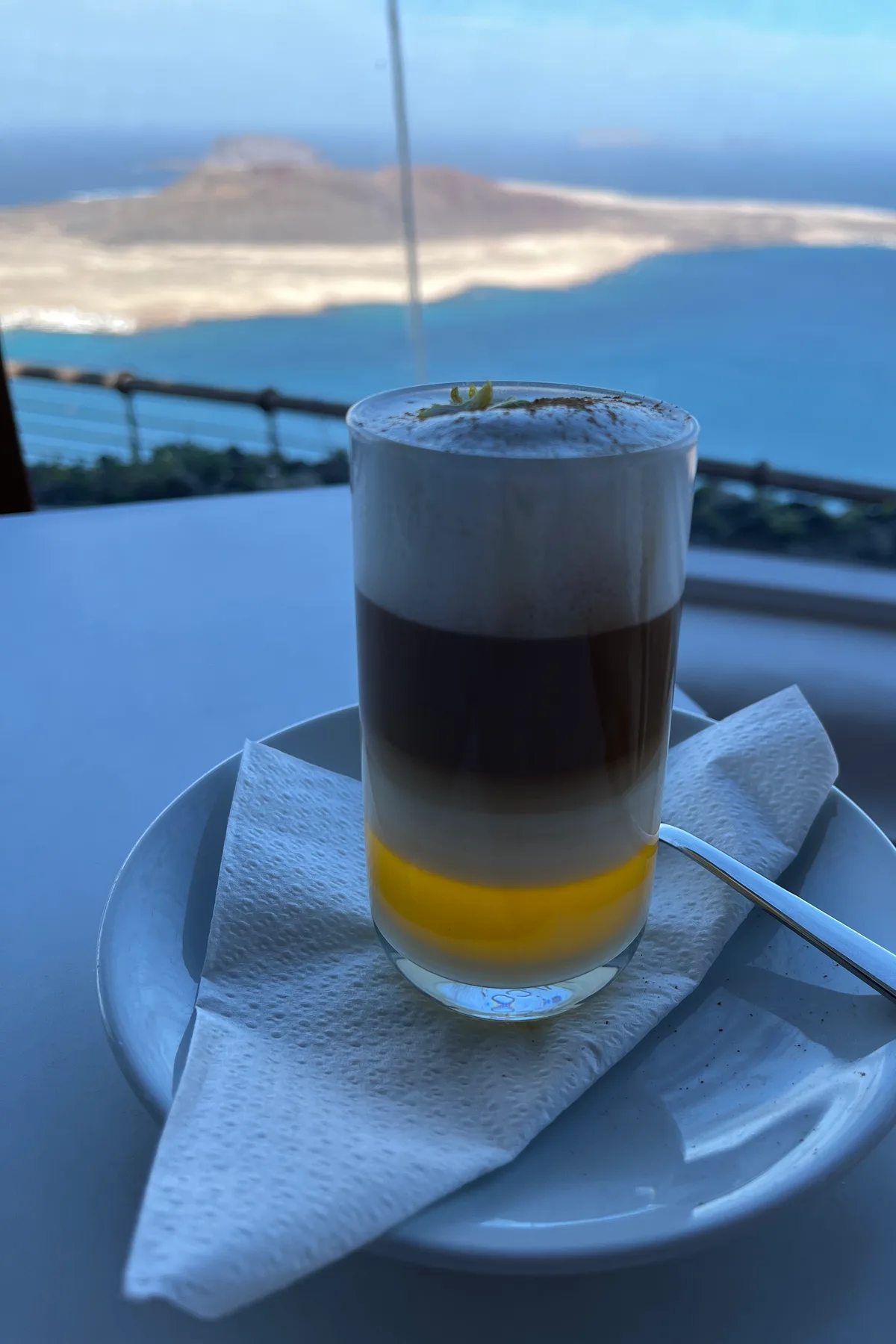
The island's desserts come from the same clever poverty as everything else — eggs, gofio, almonds, condensed milk from the shop ship — and they punch far above their humility. The essentials: quesillo, the Canarian cousin of flan, denser and richer thanks to condensed milk; bienmesabe, an almond-honey-egg cream whose name means "it tastes good to me" (no argument here); frangollo, a corn-meal pudding with raisins that grandmothers defend fiercely; gofio in dessert mode — kneaded with honey and almonds, or over ice cream; and carnival's fried tortas dusted in sugar. Then the ritual glass: ronmiel (honey rum), a moscatel from the volcanic vineyards, or a barraquito-style layered coffee. Say yes to whatever the house offers after lunch. Refusing is technically legal, but nobody does it twice.
Dessert on Lanzarote is less a course than a negotiation: you're full, the waiter knows you're full, and the little dishes arrive anyway "to share". Losing this negotiation is one of the island's great pleasures.
The pantheon, in order of ubiquity. Quesillo — despite the name, no cheese involved — is the archipelago's flan: eggs, condensed milk, caramel, baked dense enough to stand proud on the plate. Condensed milk deserves its own footnote in Canarian history: on islands where fresh milk spoiled fast and supply ships were life, the tin became a pantry staple and slipped into everything — including the coffee rituals below. Bienmesabe is the aristocrat: ground almonds, honey, egg yolk and lemon cooked into a thick golden cream, born in the archipelago's almond villages, served in a glass, over ice cream, or — dangerous knowledge — by the spoonful straight from the jar you'll buy before flying home. Frangollo is the grandmother's vote: coarse corn meal simmered with milk, raisins, almonds and lemon peel into a humble pudding that tastes like childhood, even somebody else's. Add gofio's sweet turn — amasado with honey and nuts, or sprinkled over vanilla ice cream with palm syrup (miel de palma, imported lovingly from La Gomera) — and the fried carnival sweets, torrijas and tortas, that appear in February and vanish with the confetti.
Now the glasses. Ronmiel — rum rounded with honey — is the after-lunch handshake of the whole archipelago: offered on the house more often than not, sweet enough to fool you, strong enough to punish overconfidence. The island's own moscatel and sweet malvasía from the volcanic vineyards (the wine card tells that story) are the elegant option — a small chilled glass of sweet malvasía with bienmesabe is a pairing invented in heaven's test kitchen. And coffee is its own liturgy: ask for a barraquito — layered condensed milk, liqueur, espresso, frothed milk, lemon peel and cinnamon — and watch it built like a tiny monument; the everyday version, cortado leche y leche (espresso with both kinds of milk), is how half the island starts the afternoon.
Where to indulge: village dulcerías and the pastry counters of local markets, the dessert list of any bodegón where the mains were honest, and fiestas — every romería trails a wake of sugar. The rule of thumb is the same as for the savoury card: the shorter the list, the better the quesillo. And when the house rounds off your bill with a bottle of ronmiel and shot glasses, you haven't been upsold. You've been adopted.