LMA

The sunset circuit: five ways the island ends a day

Lanzarote · 3 min read

The sunset circuit: five ways the island ends a day

Lanzarote faces its sunsets west over open ocean, and connoisseurs collect them like vintages. The five classics: El Golfo, fire-coast drama with dinner attached (card 82); the Janubio saltpans, where the pans mirror the sky in pink and copper — arguably the island's most photogenic five minutes; Famara beach, where the wet sand becomes a mirror for the cliff and the sky at low tide — bring a wide lens and bare feet; the Mirador del Río hour, when La Graciosa goes gold (Guinate for the crowd-free version, card 80); and Playa Blanca's promenade for the civilised, ice-cream-in-hand edition with Fuerteventura silhouetted. Rules of the game: check the tide for Famara, arrive 40 minutes early everywhere, stay for the afterglow — the second show — and never, ever trust a cloudless sky to be the best one. Haze and scattered clouds paint better.

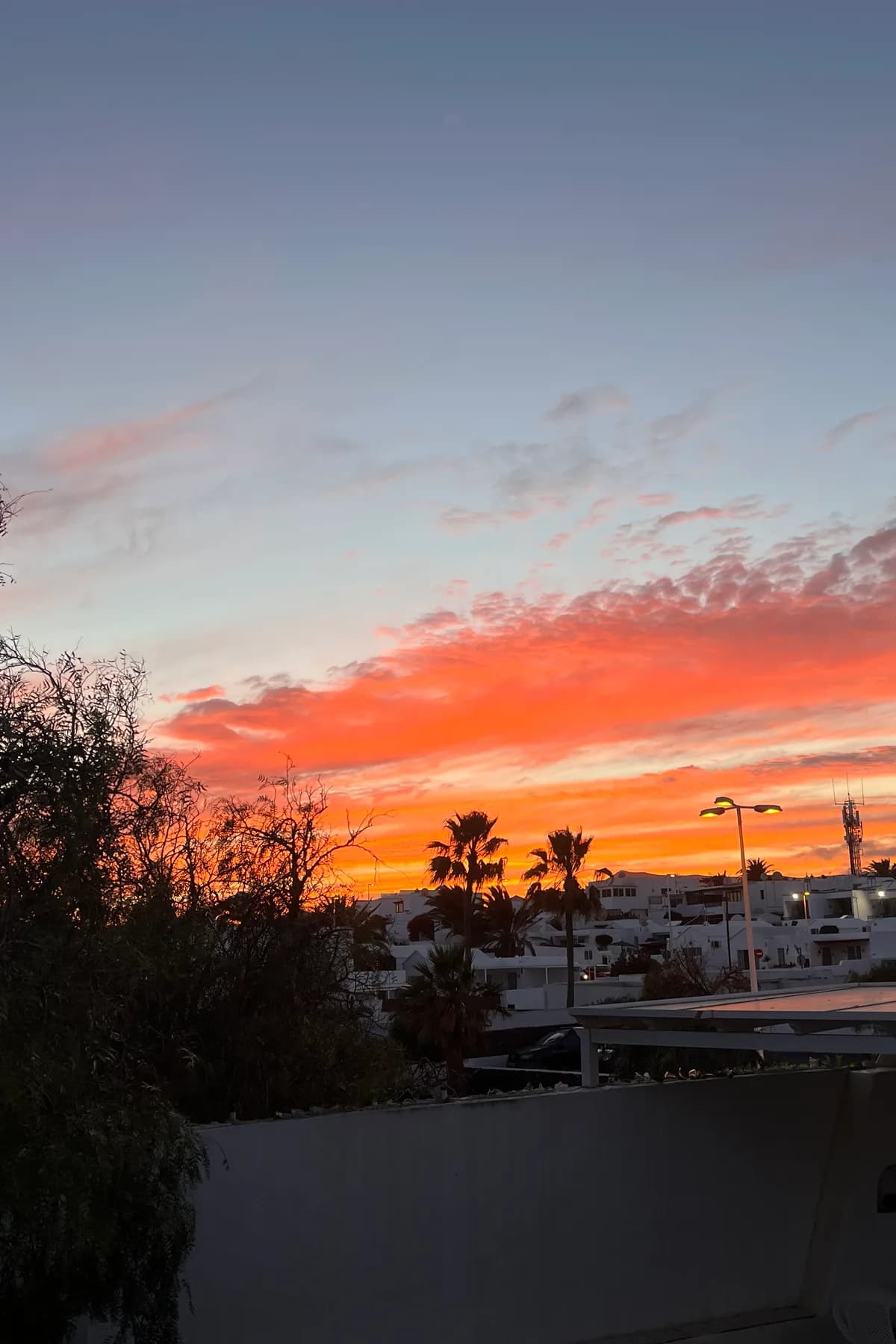
Sunset on this island isn't a moment, it's a genre — and like any genre it rewards knowing the venues. The physics help: west-facing coasts with nothing between you and America, air that's usually clean (and when the calima haze does drift in, it turns the sun into a slow red coal — different film, also worth seeing), and foregrounds that range from salt pans to surf mirrors.

El Golfo is the headline act. The hamlet faces dead west from the young lava coast; the pre-show is built in — the green lagoon of Charco de los Clicos in its half-crater, the blowholes of Los Hervideros ten minutes south (their card covers the geology) — and the main event is best from a restaurant table or the little headland north of the village. The sun sinks into open Atlantic, the black beach goes violet, and the kitchens time the parrotfish accordingly (card 82). Book the front row or come weekdays.

Salinas de Janubio is the photographer's vote. The working saltpans (the white-gold card tells their story) become, at dusk, a grid of mirrors: each pan takes the sky's colour separately — rose, copper, mercury — while the mountains behind go purple. Shoot from the roadside miradores on the northern rim or descend towards the salt shop corner for lower angles; twenty minutes after the sun drops, the pans often outperform the sky itself. Pair with the black-pebble arc of Playa Janubio below if the swell is putting on its percussion.

Famara at low tide is the romantic's answer. The great beach flattens into a kilometre of wet mirror; walkers double themselves, the cliff catches the last warm light, and surfers ride blackening lines home. Check the tides card's timetable — the mirror is a low-water phenomenon — and bring something warm: the north coast exhales cool air the moment the sun quits. Barefoot is mandatory in spirit.

The northern balconies play the elevation card: from the Mirador del Río or its free cousin at Guinate (card 80), you watch the light leave the whole Chinijo archipelago — La Graciosa's volcanoes throw shadows across the strait, Alegranza's lighthouse wakes up (card 74), and the cliff behind you turns rose. Summer puts the sun far to the northwest, ideal from up here; winter shifts the show south, when Playa Blanca's promenade and the Papagayo headlands (card 79) take over — the sun setting seaward of Montaña Roja while Fuerteventura floats in silhouette, ice cream logistics unbeatable.

House rules for all venues: arrive 40 minutes early — the warm-up light is half the concert; stay 20 minutes after — the afterglow routinely beats the sunset, and the crowds' exodus means you get it alone; a few clouds are your friends, a milky calima sky is a maybe, and a perfectly clear sky is, paradoxically, the dullest draw in the deck. The island has roughly 365 performances a year and has never repeated one. Collect responsibly.

Discover Lanzarote with LMA

More stories

An Island Carved by NatureWhite, Green and Volcanic: The Architecture of LanzaroteCésar Manrique: The Artist Who Shaped an IslandAn Ocean of AdventuresLife Beneath the WavesA Thousand Years of StoriesThe Taste of a VolcanoA Beach for Every MoodWine Grown in AshThe Island That Chose RestraintThe People Who Made This IslandThe Fire MountainsThe island's table: gofio, mojo and the art of honest cookingCycling: the professionals' winter gymLichens and tabaibas: how life comes back after a volcanoTeguise beyond the market: six centuries in white and basaltThe wind that explains (almost) everythingHalf a volcano, a green lake and a roaring coastlineThe lava tunnel that runs into the seaCreatures from another world beneath your feetSweet endings: quesillo, bienmesabe and the little glass that followsSailing: navigating the sea of the trade windsTales of the Timanfaya devilA river of sand crosses the island (and it doesn't come from the Sahara)600 degrees beneath your shoesMalpaís, lajial, hornitos: learn to read the lavaFarming without rain: the peasant engineering that amazes the worldThe devil of Timanfaya and the Virgin who stopped the lavaThe cochineal: the insect that dyed half of Europe redIllustrious visitors: a palace gifted between kings and the house Omar Sharif lost at cardsTides: the ocean breathes twice a dayThe eternal spring: why it's never cold here — nor too hotBeyond tourism: what the island exportsAloe vera: the island's green pharmacyLa Graciosa: the eighth island, no tarmac and no hurryErmita de las Nieves: the top of the wall (and the island's oldest weather report)Ajaches: the grand old mountains hiding behind PapagayoWhen it rains (yes, it happens): the island's rarest spectacleUnder the darkest sky: stargazing on the volcano islandWine from the ashes: La Geria and the miracle of malvasía volcánicaSpeak like a conejero: little words that open the islandTimple, isas and the Rancho de Teguise: the island's soundtrackWhat the names mean: reading the map's oldest language1852: the year the islands went duty-free (and why your shopping still is)Europe's biggest marine reserve is right next doorCaletón Blanco: white sand on black lava (the north's little Caribbean)Playa del Risco: the beach you have to earn (or the island's best-kept walk)The island's guardians: the projects that look after itReading the ocean: flags, currents and swimming like a localPlan B: the art of the "bad-weather" day (a user's manual)The suitcases to Havana: when conejeros crossed the seaBeyond La Graciosa: Alegranza, Montaña Clara and the wild end of the worldArrecife: the capital that grew out of a puddle (a love letter)The natural pools: Punta Mujeres, Los Charcones and the art of the charcoPapagayo done properly: the golden coves without the golden crowdsThe north loop: palms, cliffs and the island's greenest morningEat where the boats land: a fish-village crawlThe Stratified City: the labyrinth the wind carved (and nobody visits)Where astronauts learn to walk on other worldsIllustrious islanders: Einstein's physicist, the voice of "El talismán" and the barber of HaríaWhite gold: the salt pans that fed half a fleetThe island the pirates wouldn't leave in peaceWho lives on the island (and who visits it)?The island's calendar: a whole year of fiestas and eventsWhat exactly is the calima?Puerto del Carmen: the little fishing village where it all began (and the parrots' corner)Fifteen million years: the veteran of the archipelagoThe blind crab: white, tiny and found nowhere else on EarthThe hanging garden of FamaraSan Borondón: the island that appears and disappearsSurviving without rain: the tricks of the coastal plantsSurfing: El Quemao, Famara and the wave the champions respect