LMA

Tales of the Timanfaya devil

Lanzarote · 3 min read

Tales of the Timanfaya devil

Sit down — this one is better told slowly. When the earth opened in 1730, the islanders saw in the flames what their times allowed them to see: the devil himself dancing among the volcanoes. From that fear were born tales still whispered today: figures dancing in the glow, pacts, cries beneath the earth. And a more tender one: the tale of old Hilario, the hermit who after the eruptions settled in the very heart of the fire with his camel, planted a fig tree on the volcano's warmth — and the fig tree, they say, gave flowers but never fruit: it refused to feed the devil. The hillock where he lived bears his name, and on top of it today stands the restaurant that roasts chickens with volcanic heat. Tales, here, end at the table.

Every extreme landscape manufactures its own tales, and few landscapes in the world are such good manufacturers as Timanfaya. This card is for reading slowly — or better still, for telling aloud while looking at the Fire Mountains.

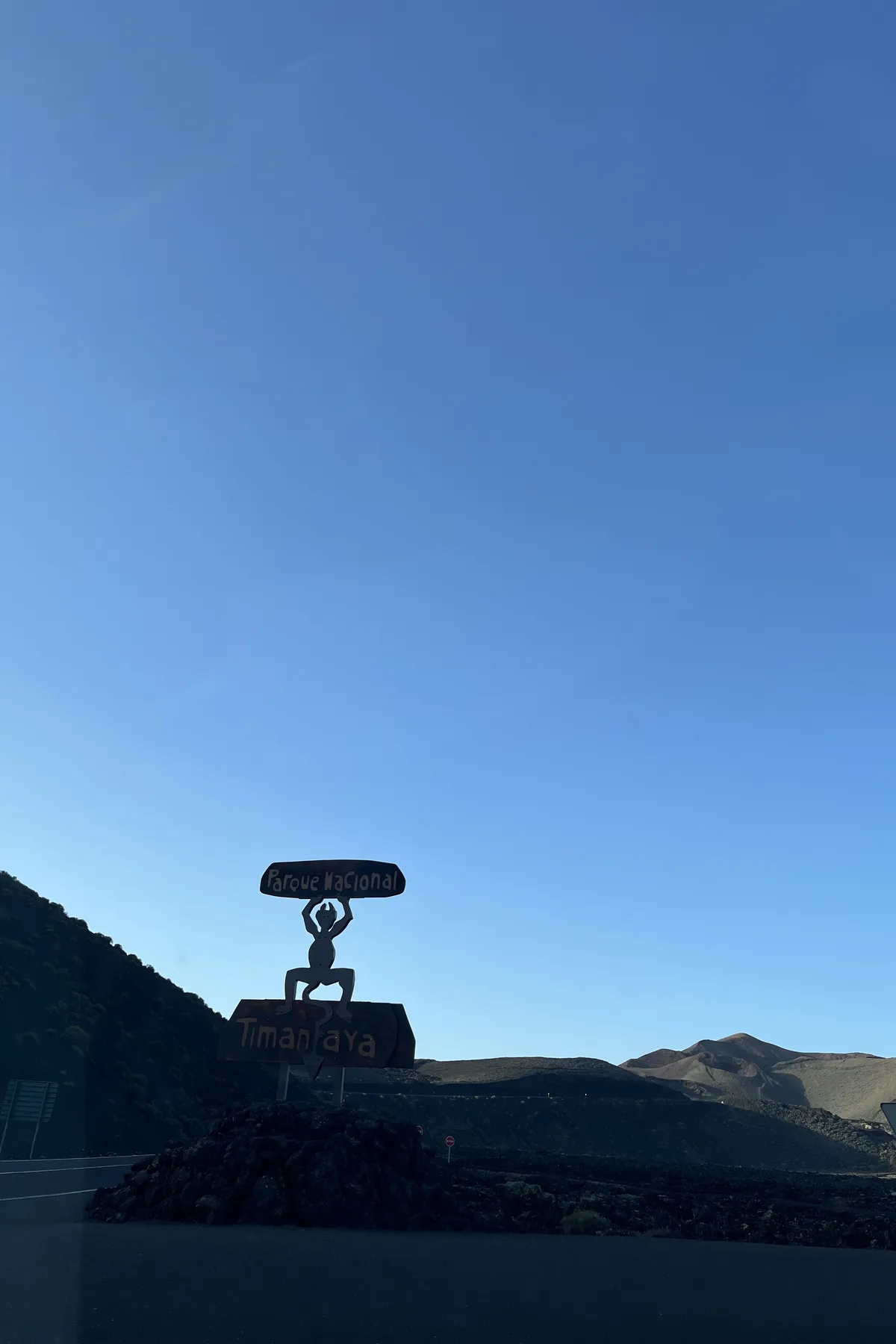
The cycle begins, like everything here, in 1730. For the peasants of the eighteenth century, without volcanology or newspapers, those columns of fire could only have one author, and he had horns. The tales ran from wake to wake: that in the red glow of the nights silhouettes could be seen dancing; that voices came out of the cracks; that the smoke drew faces. Fear baptised the territory — the Fire Mountains were for generations a place from which to avert one's gaze — and left its mark even on the language: the volcano's phenomena were spoken of with respect, as one speaks of someone who might be listening. Two centuries later, César Manrique would perform the definitive trick of cultural magic (card 27): drawing that devil with affection and turning him into the island's host. Fear, domesticated, became a brand.

But the best-loved tale in the cycle is that of a gentle man. Tradition tells that, once the volcanoes had gone quiet, a solitary old man named Hilario settled exactly where nobody wanted to live: on an islet of soil surrounded by lava, in the still-warm heart of the burnt land. He lived with his camel — a donkey, in some versions; island tales never sign affidavits — and with the patience of a lay saint. And he planted a fig tree. The tree, fed by earth that still held the heat of hell, grew and flowered… but never gave a single fig. The old folk explained it with a perfect verdict: the fig tree refused to give fruit to the devil. Other versions make Hilario a penitent hermit, or a survivor of the eruptions returned to his land; all agree on the ending: that rise has been called the Islote de Hilario ever since. And the story has a delicious postscript — today, on that exact spot, the restaurant El Diablo roasts food over the volcano's real heat (card 18). Where Hilario's fig tree refused to bear fruit, the island ended up laying the table. Few places in the world round off their own legends so well.

The popular repertoire holds more pieces: shepherds who heard bells beneath the malpaís (badlands of raw lava), lights crossing the lava fields at night — today we know about gases, refractions and fumaroles; back then people knew about apparitions — and the peasant certainty that the volcano "was asleep, not dead", which modern science, with its sensors, curiously endorses (card 18).

These tales are heritage as real as the rocks: the way a community digested, with imagination and humour, the most terrifying episode in its history. When you pass Manrique's little devil at the entrance to the park, greet him knowingly: he is the fear of 1730, retired and smiling, now charging in photographs.

Discover Lanzarote with LMA

More stories

An Island Carved by NatureWhite, Green and Volcanic: The Architecture of LanzaroteCésar Manrique: The Artist Who Shaped an IslandAn Ocean of AdventuresLife Beneath the WavesA Thousand Years of StoriesThe Taste of a VolcanoA Beach for Every MoodWine Grown in AshThe Island That Chose RestraintThe People Who Made This IslandThe Fire MountainsMalpaís, lajial, hornitos: learn to read the lavaFarming without rain: the peasant engineering that amazes the worldThe devil of Timanfaya and the Virgin who stopped the lavaThe cochineal: the insect that dyed half of Europe redIllustrious visitors: a palace gifted between kings and the house Omar Sharif lost at cardsTides: the ocean breathes twice a dayThe eternal spring: why it's never cold here — nor too hotBeyond tourism: what the island exportsAloe vera: the island's green pharmacyLa Graciosa: the eighth island, no tarmac and no hurryErmita de las Nieves: the top of the wall (and the island's oldest weather report)Ajaches: the grand old mountains hiding behind PapagayoWhen it rains (yes, it happens): the island's rarest spectacleWine from the ashes: La Geria and the miracle of malvasía volcánicaSpeak like a conejero: little words that open the islandTimple, isas and the Rancho de Teguise: the island's soundtrackWhat the names mean: reading the map's oldest languageEurope's biggest marine reserve is right next doorPlaya del Risco: the beach you have to earn (or the island's best-kept walk)The island's guardians: the projects that look after itReading the ocean: flags, currents and swimming like a localPlan B: the art of the "bad-weather" day (a user's manual)The suitcases to Havana: when conejeros crossed the seaBeyond La Graciosa: Alegranza, Montaña Clara and the wild end of the worldArrecife: the capital that grew out of a puddle (a love letter)The natural pools: Punta Mujeres, Los Charcones and the art of the charcoPapagayo done properly: the golden coves without the golden crowdsThe north loop: palms, cliffs and the island's greenest morningEat where the boats land: a fish-village crawlThe sunset circuit: five ways the island ends a dayThe Stratified City: the labyrinth the wind carved (and nobody visits)Where astronauts learn to walk on other worldsIllustrious islanders: Einstein's physicist, the voice of "El talismán" and the barber of HaríaWhite gold: the salt pans that fed half a fleetThe island the pirates wouldn't leave in peaceWho lives on the island (and who visits it)?The island's calendar: a whole year of fiestas and eventsWhat exactly is the calima?Puerto del Carmen: the little fishing village where it all began (and the parrots' corner)Fifteen million years: the veteran of the archipelagoThe blind crab: white, tiny and found nowhere else on EarthThe hanging garden of FamaraSan Borondón: the island that appears and disappearsSurviving without rain: the tricks of the coastal plantsSurfing: El Quemao, Famara and the wave the champions respectCycling: the professionals' winter gymLichens and tabaibas: how life comes back after a volcanoTeguise beyond the market: six centuries in white and basaltThe wind that explains (almost) everythingHalf a volcano, a green lake and a roaring coastlineThe lava tunnel that runs into the seaCreatures from another world beneath your feetSweet endings: quesillo, bienmesabe and the little glass that followsSailing: navigating the sea of the trade windsA river of sand crosses the island (and it doesn't come from the Sahara)600 degrees beneath your shoes