LMA

What exactly is the calima?

Lanzarote · 3 min read

What exactly is the calima?

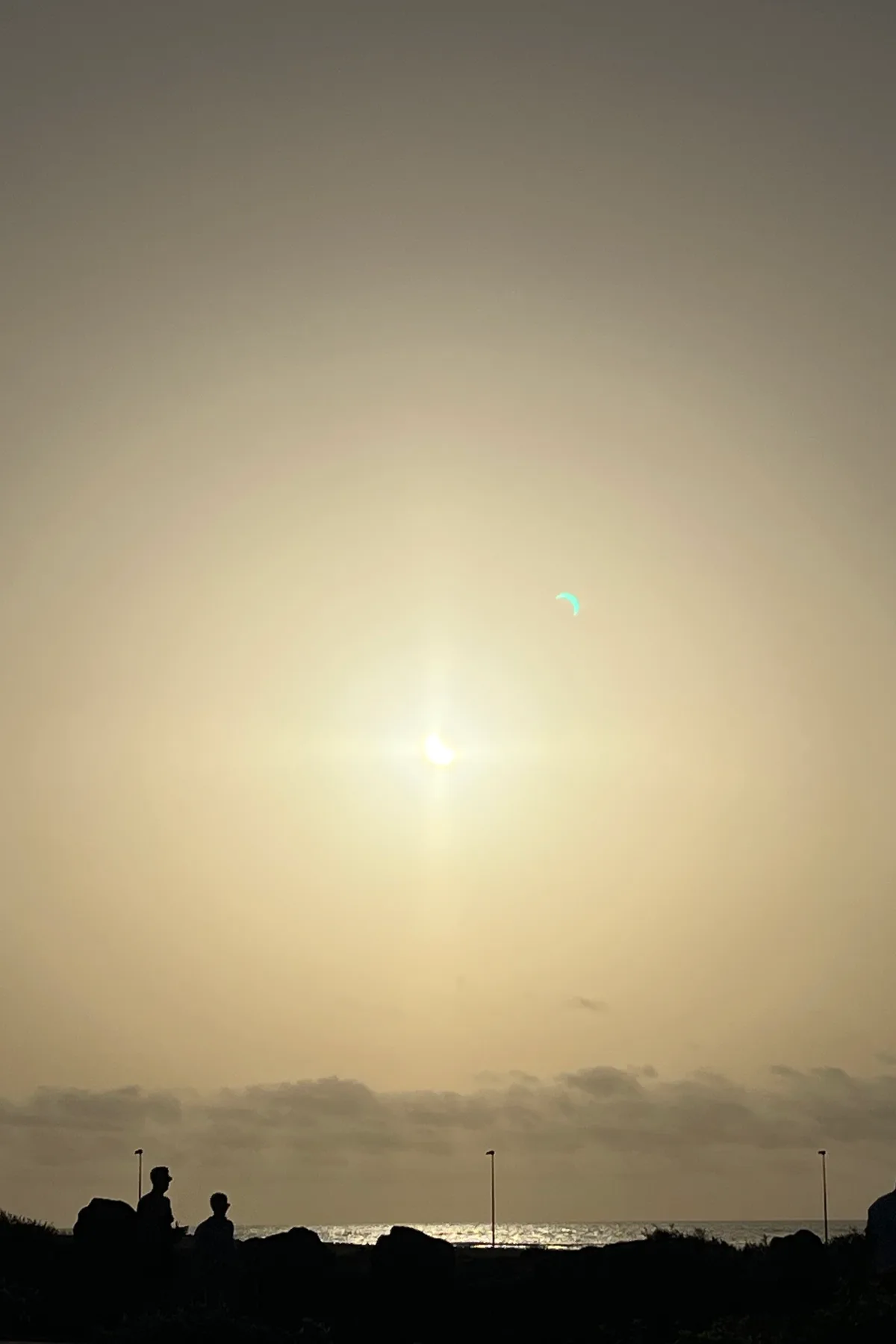
One day the horizon disappears, the volcanoes turn into ghosts and the sky takes on the yellow tint of a Western: welcome to the calima (Saharan dust haze). It is neither fog nor pollution: it is Saharan dust in suspension — ultra-fine particles that the east wind lifts in the desert, just 130 km away, and carries over here, often with hot air. It usually lasts two to four days, sends thermometers up and visibility down. Is it a nuisance? A little, above all for people with asthma or allergies: on such a day, better indoor plans and plenty of water. Is it dangerous? Rarely — although in February 2020 a historic calima went as far as closing every airport in the Canaries. And in exchange it delivers the most dramatic sunsets of the year.

The calima (Saharan dust haze) is the meteorological reminder of a fact the beaches make you forget: Africa is right next door. Barely 130 kilometres separate Lanzarote from the Saharan coast, and when the atmospheric circulation reverses — when the humid north-east alisio (trade wind) gives way to wind from the east or south-east — the island receives the direct breath of the largest desert on the planet.

The mechanism is pure atmospheric physics. Over the Sahara, windstorms lift millions of tonnes of mineral dust — microscopic particles of clay, quartz and iron. That dust rises and travels in a layer of dry, warm air that scientists call the Saharan Air Layer, capable of crossing the entire Atlantic (Saharan dust fertilises even the Amazon). The Canaries, by neighbourhood, receive the concentrated version: when the wind blows from the east, the dust cloud covers the islands, visibility drops — from the 60 km of a clear day to 10, 5 or under 3 in strong episodes — and the sky adopts that characteristic ochre-yellow palette. Since the air comes from the desert, the calima usually arrives with rising temperatures: the hottest days of the year in Lanzarote are almost always calima days.

How often does it happen? Several times a year, in any season, with greater frequency and intensity in winter and during summer heatwaves. A typical episode lasts two to four days and takes its leave when the alisio resumes its shift and "sweeps" the air clean. The weather services give advance warning (look for "calima" or "polvo en suspensión" in the AEMET forecast), so it catches nobody by surprise who checks the outlook.

And what do you do on a calima day? With common sense, life goes on almost as normal. People with asthma, COPD or respiratory allergies, small children and the elderly should avoid intense outdoor exercise and consider a mask if the episode is strong; everyone benefits from drinking more water and closing the windows. Serious sport is postponed or moved indoors. And it is the perfect day for the luxury plan B: Cueva de los Verdes, Jameos, museums, the bodegas of La Geria — the underground island and the wine island pay no attention to dust. The photographers, meanwhile, go out hunting: the filtered light of the calima produces unrepeatable red sunsets and science-fiction landscapes.

Two final clarifications from a local friend. One: the calima brings dust, not sand — the sand on the beaches is marine, not Saharan (card 35); what the calima leaves is a fine film on cars and terraces that the next rain washes away. And two: the episode of February 2020 — the "calima of the century", which closed every airport in the archipelago for a weekend — was exceptional: once in a generation. The normal version is far humbler: a yellow veil, two lazy days and a sunset you will never forget.

Discover Lanzarote with LMA

More stories

An Island Carved by NatureWhite, Green and Volcanic: The Architecture of LanzaroteCésar Manrique: The Artist Who Shaped an IslandAn Ocean of AdventuresLife Beneath the WavesA Thousand Years of StoriesThe Taste of a VolcanoA Beach for Every MoodWine Grown in AshThe Island That Chose RestraintThe People Who Made This IslandThe Fire MountainsThe island's table: gofio, mojo and the art of honest cookingCycling: the professionals' winter gymLichens and tabaibas: how life comes back after a volcanoTeguise beyond the market: six centuries in white and basaltThe wind that explains (almost) everythingHalf a volcano, a green lake and a roaring coastlineThe lava tunnel that runs into the seaCreatures from another world beneath your feetSweet endings: quesillo, bienmesabe and the little glass that followsSailing: navigating the sea of the trade windsTales of the Timanfaya devilA river of sand crosses the island (and it doesn't come from the Sahara)600 degrees beneath your shoesMalpaís, lajial, hornitos: learn to read the lavaFarming without rain: the peasant engineering that amazes the worldThe devil of Timanfaya and the Virgin who stopped the lavaThe cochineal: the insect that dyed half of Europe redIllustrious visitors: a palace gifted between kings and the house Omar Sharif lost at cardsTides: the ocean breathes twice a dayThe eternal spring: why it's never cold here — nor too hotBeyond tourism: what the island exportsAloe vera: the island's green pharmacyLa Graciosa: the eighth island, no tarmac and no hurryErmita de las Nieves: the top of the wall (and the island's oldest weather report)Ajaches: the grand old mountains hiding behind PapagayoWhen it rains (yes, it happens): the island's rarest spectacleUnder the darkest sky: stargazing on the volcano islandWine from the ashes: La Geria and the miracle of malvasía volcánicaSpeak like a conejero: little words that open the islandTimple, isas and the Rancho de Teguise: the island's soundtrackWhat the names mean: reading the map's oldest language1852: the year the islands went duty-free (and why your shopping still is)Europe's biggest marine reserve is right next doorCaletón Blanco: white sand on black lava (the north's little Caribbean)Playa del Risco: the beach you have to earn (or the island's best-kept walk)The island's guardians: the projects that look after itReading the ocean: flags, currents and swimming like a localPlan B: the art of the "bad-weather" day (a user's manual)The suitcases to Havana: when conejeros crossed the seaBeyond La Graciosa: Alegranza, Montaña Clara and the wild end of the worldArrecife: the capital that grew out of a puddle (a love letter)The natural pools: Punta Mujeres, Los Charcones and the art of the charcoPapagayo done properly: the golden coves without the golden crowdsThe north loop: palms, cliffs and the island's greenest morningEat where the boats land: a fish-village crawlThe sunset circuit: five ways the island ends a dayThe Stratified City: the labyrinth the wind carved (and nobody visits)Where astronauts learn to walk on other worldsIllustrious islanders: Einstein's physicist, the voice of "El talismán" and the barber of HaríaWhite gold: the salt pans that fed half a fleetThe island the pirates wouldn't leave in peaceWho lives on the island (and who visits it)?The island's calendar: a whole year of fiestas and eventsPuerto del Carmen: the little fishing village where it all began (and the parrots' corner)Fifteen million years: the veteran of the archipelagoThe blind crab: white, tiny and found nowhere else on EarthThe hanging garden of FamaraSan Borondón: the island that appears and disappearsSurviving without rain: the tricks of the coastal plantsSurfing: El Quemao, Famara and the wave the champions respect