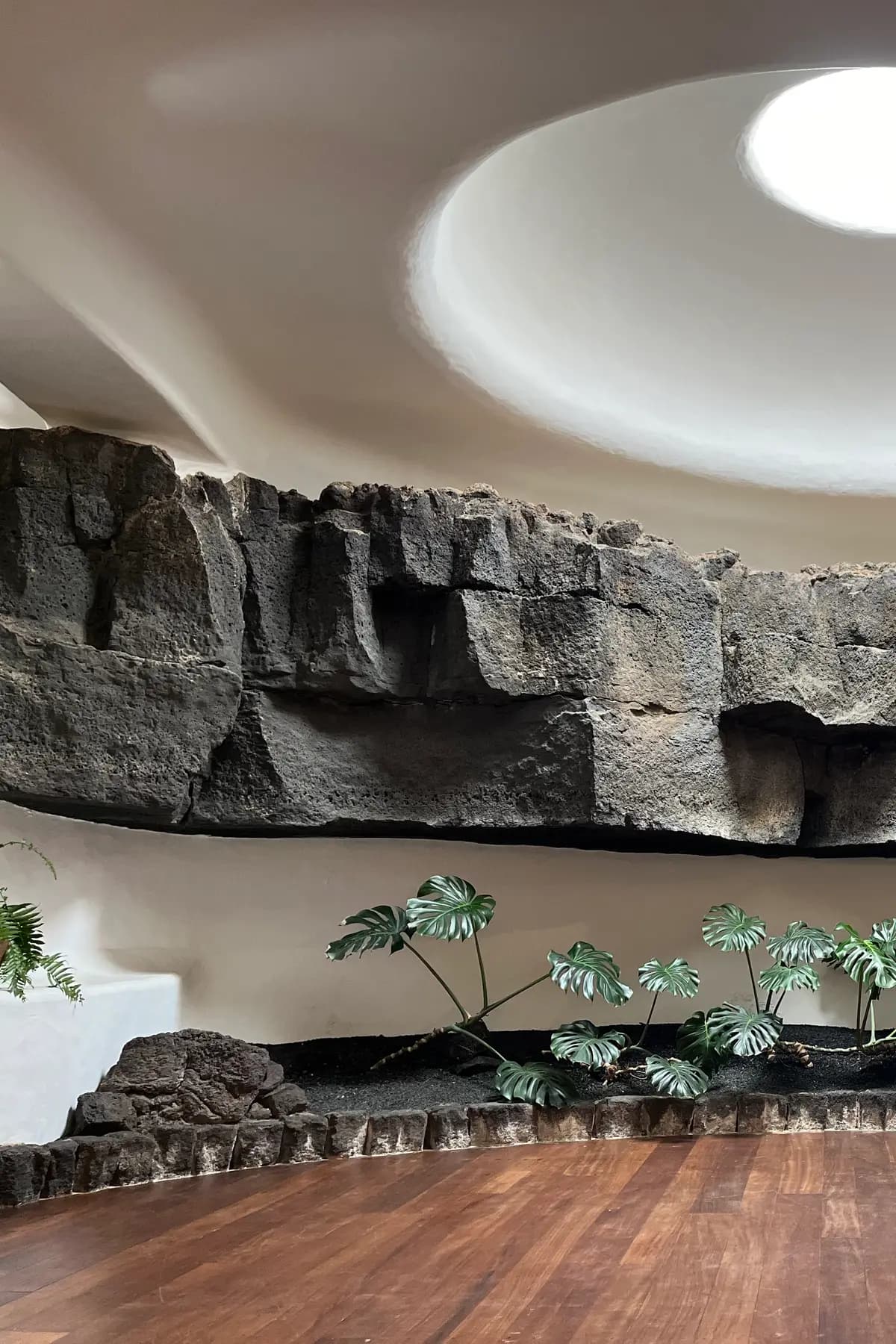
Two or three days a year it rains (card 87 says celebrate); a few more, calima dust yellows the air or clouds squat on your resort. The island's answer is a deep Plan B bench. The Manrique circuit becomes indoor art: Jameos del Agua, the Fundación in his lava house, the Casa-Museo in Haría, the Jardín de Cactus. Castles hold museums (piracy in Teguise's, contemporary art and lunch in San José, history in San Gabriel). Bodegas pour malvasía regardless of weather (card 68); Teguise and Arrecife reward wandering (cards 81, 75); the Cueva de los Verdes doesn't care what the sky does. And remember the microclimate escape: grey in Costa Teguise often means sunny in Playa Blanca — twenty minutes south. The island has no bad days. Only unassigned ones.
Let's define the emergency honestly: Lanzarote's "bad weather" would pass for a decent summer day in half of Europe. But holidays run on expectations, and a morning of stubborn cloud (the panza de burro's little local cousin), a calima's milky glare, or the annual rain can wrong-foot a beach itinerary. Hence this card — the island's indoor and all-weather repertoire, organised for deployment.
The Manrique circuit is Plan B royalty, because the island's greatest artist essentially built for it: his spaces are as much interior as landscape. Jameos del Agua — the collapsed lava tube turned concert hall, pool and grotto of the blind crabs (their card is the series' opening act) — is arguably better under drama-cloud than under summer glare. The Fundación César Manrique in Tahíche, his house built inside five volcanic bubbles, is entirely an interior experience; the Casa-Museo in Haría (card 80) adds the intimate final chapter; the Jardín de Cactus in Guatiza tolerates any sky and photographs best under bright overcast. Do two or three with lunch and you've had a great day by any country's standards, no sun required.
History fills the second shelf. The Castillo de Santa Bárbara's piracy museum above Teguise (card 81) pairs with old-town wandering and long café stops; Arrecife (card 75) offers the San José contemporary art museum — with the island's best rainy-day lunch under it —, San Gabriel's history rooms, church, market and shopping streets; Teguise adds the timple palace (card 70). The Cueva de los Verdes runs its underground theatre identically in all weathers, and the wine country turns a grey afternoon into its best self: cellar tours, tastings, the vine museum at the old houses — barrels don't need blue sky (card 68, with a designated driver or the wine-route buses).
The meteorological jujitsu, though, is the local master move: this island does microclimates (the eternal-spring and alisios cards explain the machinery). The standard grey-day pattern — cloud pinned against the north and east — often leaves the south lee sparkling: if Costa Teguise or Arrecife wakes up dull, check the webcams or just drive; Playa Blanca and Papagayo (card 79) are frequently in a different weather country twenty minutes down the road. Calima days invert the advice — the dust is everywhere, so pick interiors and short coastal walks (the milky light is weirdly good for photography and terrible for panoramas), hydrate, and let the spectacular calima sunset (card 84's asterisk) close the show.
And keep one truth in the back pocket: some of the island's finest hours wear grey. Timanfaya under racing clouds looks properly apocalyptic; Famara's cliff with mist snagging its crest becomes Scotland-on-lava; empty beaches in soft light belong to walkers and photographers. The visitors who complain about a cloudy day and the ones who talk about it for years saw the same sky. The difference was the plan — and now you have one.