LMA

The Stratified City: the labyrinth the wind carved (and nobody visits)

Lanzarote · 3 min read

The Stratified City: the labyrinth the wind carved (and nobody visits)

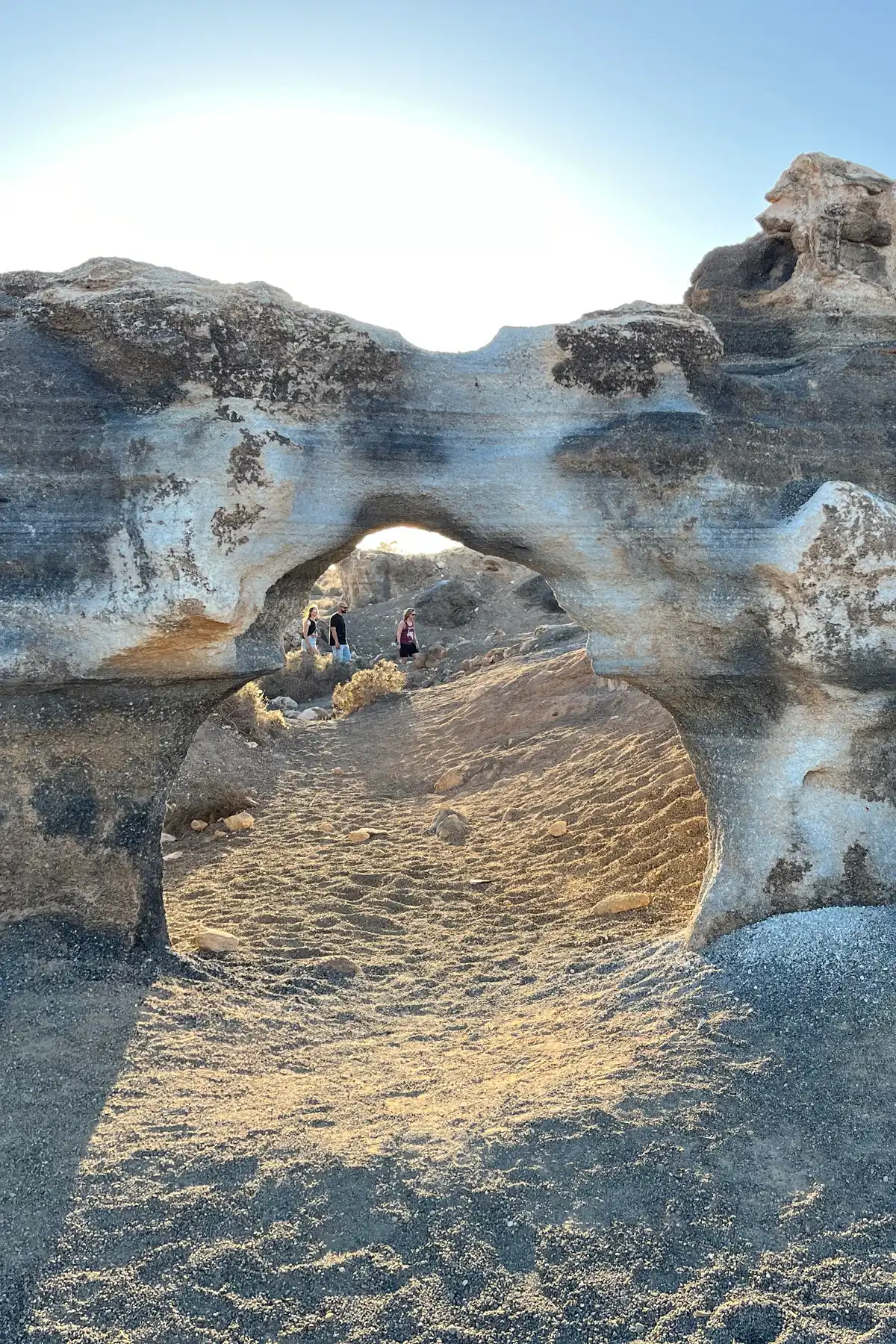
Between Teseguite and Guatiza, just off the road, waits the island's strangest free gallery: the Stratified City — an outcrop of compacted volcanic ash that wind and rare rains have sculpted into arches, bubbles, columns and honeycombed walls, like a ruined city designed by Gaudí and abandoned by ghosts. Geologists read it as layered tuff eroding at different speeds; photographers read it as the island's best textures; almost everyone else drives past. Ten minutes of wandering the sandy lanes between the formations delivers proper astonishment — sunrise and late afternoon carve the shadows deepest. It's fragile stuff: climbing the arches breaks in years what took millennia. Look, photograph, leave only footprints in the sand lanes. The wind is still working; try not to interrupt the artist.

Every island has landscapes that got famous and landscapes that got lucky. The Stratified City got lucky: no visitor centre, no coach park, not even a proper sign — just a cluster of pale, layered rock rising from the plain south of Guatiza, in sight of the road, wearing shapes that make you slow the car and reverse.

The material is volcanic tuff — layers of ash and cinders from the region's old eruptions, compacted into soft stone, later mantled by the sands of the jable corridor (that card explains the sand highway). Then erosion took over as head architect: the trade winds sandblast the outcrops with fine grains, the rare but violent rains dissolve and undercut, and the different layers — some harder, some softer — respond at different speeds. The result is differential erosion's greatest hits: window arches, mushroom caps on slim stems, walls drilled into honeycomb (the geologists' lovely word is tafoni), smooth bowls and gothic ribs, all in tones from cream to rust that shift with every hour of light. "Stratified City" is the nickname that stuck — from a distance the skyline genuinely reads as ruined towers and alleys — and the place carries the quiet thrill of somewhere that hasn't been formatted for visitors: you park on dirt, you wander, you decide your own route between the "buildings".

The craft of visiting: light is everything here — low morning or late-afternoon sun rakes across the layers and turns the whole outcrop three-dimensional; midday flattens it to beige. Wind is the resident sculptor and will be present; a light jacket and lens caution (fine sand) are wise. The ground between formations is sandy lanes and low scrub — aulagas and salt-tolerant cushions that the botany cards celebrate — with occasional lizards posing on ledges. And the fragility is real, not rhetorical: this is soft rock, carved at geological patience, and every climbed arch and carved initial is permanent vandalism. The unwritten local deal that keeps such places unfenced is simple — no barriers as long as nobody needs them. Be the reason it stays that way.

Pair it cleverly: the Jardín de Cactus is five minutes north in Guatiza (Manrique's last great public work — his card covers it), the cochineal fields around it tell the red-dye story, and Teguise (card 81) is ten minutes west — together they make the island's best half-day of "small wonders". The Stratified City will be the one you tell people about, precisely because nobody told you. Some landscapes are monuments. This one is a rumour — and it's true.

Discover Lanzarote with LMA

More stories

An Island Carved by NatureWhite, Green and Volcanic: The Architecture of LanzaroteCésar Manrique: The Artist Who Shaped an IslandAn Ocean of AdventuresLife Beneath the WavesA Thousand Years of StoriesThe Taste of a VolcanoA Beach for Every MoodWine Grown in AshThe Island That Chose RestraintThe People Who Made This IslandThe Fire Mountains600 degrees beneath your shoesMalpaís, lajial, hornitos: learn to read the lavaFarming without rain: the peasant engineering that amazes the worldThe devil of Timanfaya and the Virgin who stopped the lavaThe cochineal: the insect that dyed half of Europe redIllustrious visitors: a palace gifted between kings and the house Omar Sharif lost at cardsTides: the ocean breathes twice a dayBeyond tourism: what the island exportsThe eternal spring: why it's never cold here — nor too hotAloe vera: the island's green pharmacyLa Graciosa: the eighth island, no tarmac and no hurryErmita de las Nieves: the top of the wall (and the island's oldest weather report)Ajaches: the grand old mountains hiding behind PapagayoWhen it rains (yes, it happens): the island's rarest spectacleWine from the ashes: La Geria and the miracle of malvasía volcánicaSpeak like a conejero: little words that open the islandTimple, isas and the Rancho de Teguise: the island's soundtrackWhat the names mean: reading the map's oldest languageEurope's biggest marine reserve is right next doorPlaya del Risco: the beach you have to earn (or the island's best-kept walk)The island's guardians: the projects that look after itReading the ocean: flags, currents and swimming like a localPlan B: the art of the "bad-weather" day (a user's manual)The suitcases to Havana: when conejeros crossed the seaBeyond La Graciosa: Alegranza, Montaña Clara and the wild end of the worldArrecife: the capital that grew out of a puddle (a love letter)The natural pools: Punta Mujeres, Los Charcones and the art of the charcoPapagayo done properly: the golden coves without the golden crowdsThe north loop: palms, cliffs and the island's greenest morningEat where the boats land: a fish-village crawlThe sunset circuit: five ways the island ends a dayWhere astronauts learn to walk on other worldsIllustrious islanders: Einstein's physicist, the voice of "El talismán" and the barber of HaríaWhite gold: the salt pans that fed half a fleetThe island the pirates wouldn't leave in peaceWho lives on the island (and who visits it)?The island's calendar: a whole year of fiestas and eventsWhat exactly is the calima?Puerto del Carmen: the little fishing village where it all began (and the parrots' corner)Fifteen million years: the veteran of the archipelagoThe blind crab: white, tiny and found nowhere else on EarthThe hanging garden of FamaraSan Borondón: the island that appears and disappearsSurviving without rain: the tricks of the coastal plantsSurfing: El Quemao, Famara and the wave the champions respectCycling: the professionals' winter gymLichens and tabaibas: how life comes back after a volcanoTeguise beyond the market: six centuries in white and basaltThe wind that explains (almost) everythingHalf a volcano, a green lake and a roaring coastlineThe lava tunnel that runs into the seaCreatures from another world beneath your feetSweet endings: quesillo, bienmesabe and the little glass that followsA river of sand crosses the island (and it doesn't come from the Sahara)Tales of the Timanfaya devilSailing: navigating the sea of the trade winds