LMA

Arrecife: the capital that grew out of a puddle (a love letter)

Lanzarote · 3 min read

Arrecife: the capital that grew out of a puddle (a love letter)

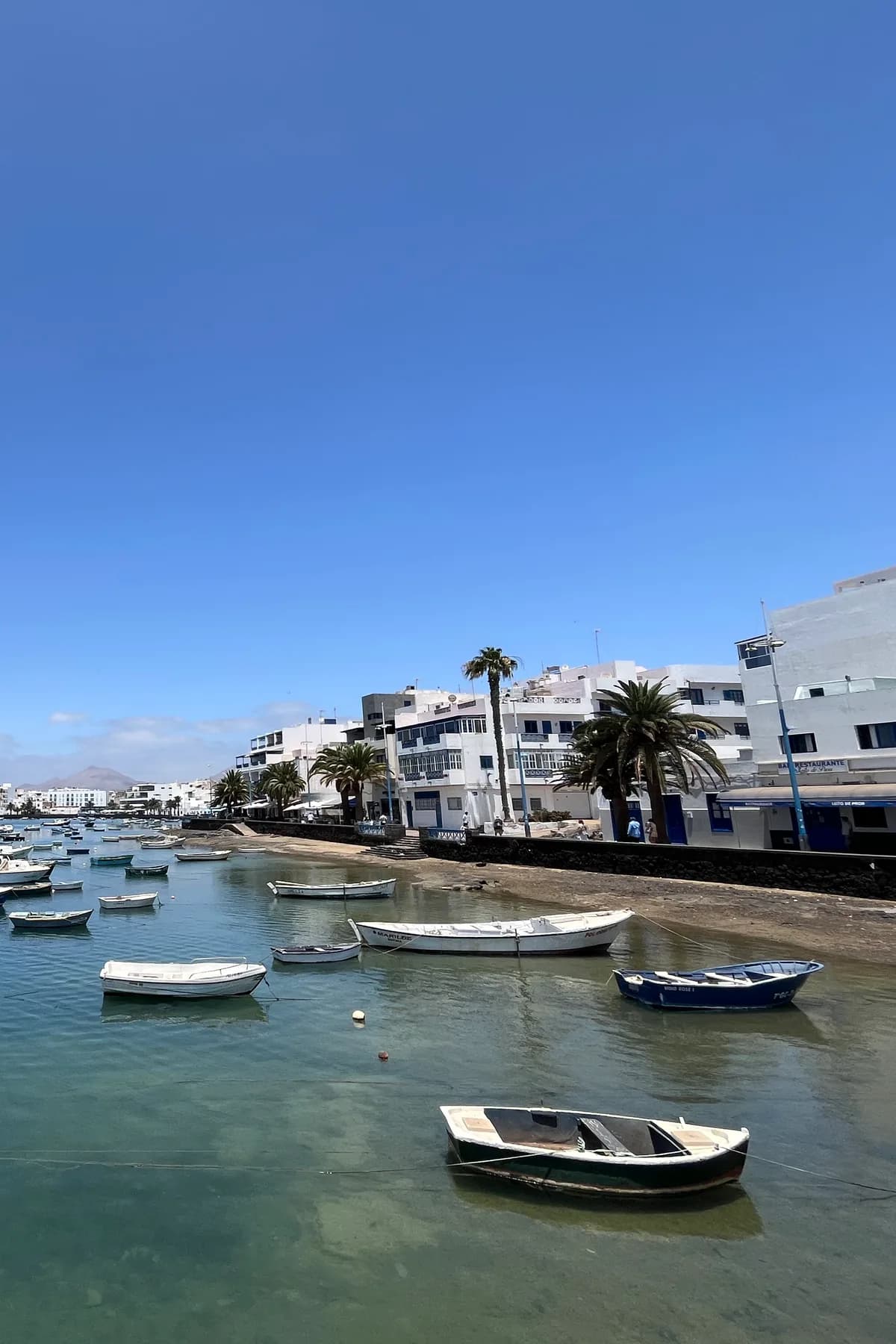
Tourists skip Arrecife, which is exactly why you shouldn't. The island's capital grew around the Charco de San Ginés — a natural sea-lagoon where fishermen parked their boats behind the reefs that named the town — and the old quarter still wraps around that water like a harbour-village that got promoted. The greatest hits fit in one lazy morning: the Charco's ring of white houses and blue boats, the church of San Ginés on its shaded plaza, the Puente de las Bolas drawbridge leading to the little castle of San Gabriel, the seafront castle of San José that Manrique turned into a contemporary art museum with the island's most elegant restaurant, and Calle Real's shops and tapas. Add real-city prices, real-city bars and zero staging. The island's living room, no costume required.

Arrecife spent most of history being too dangerous to matter. The capital sat inland at Teguise precisely because the coast belonged to pirates (their card tells it), and this stretch of shore — a maze of reefs, arrecifes, that gave the town its name — was just the port quarter: salt stores, fish, and two small castles to slow down the wrong kind of visitor. Then the nineteenth century flipped the logic. Free ports (card 72), steamships and trade made harbours the new gold, and in 1852 the fishing quarter formally became the capital. It has been quietly getting on with real life ever since — which is precisely its charm in an island of showpieces.

Start at the Charco de San Ginés, the town's heart and origin: a natural lagoon where the sea slips in behind the reefs, ringed by a promenade of low white houses, small bridges and working boats that Manrique's restoration turned into one of the island's loveliest urban spaces without killing its ordinariness. Legend says a hermit named Ginés lived beside the water and his lamp guided fishermen home — the church of San Ginés, patron of the city, stands a street away on a plaza of laurels and café tables, its volcanic-stone tower one of the island's finest. The fiesta of San Ginés in August turns the whole quarter into a fairground.

Seaward, the defensive heirlooms: walk the Puente de las Bolas — the little drawbridge topped by two stone cannonballs, an icon so beloved it appears in the island's shorthand — to the Castillo de San Gabriel on its islet, a pocket fortress that failed heroically in 1586 and now hosts the city's history museum and the best rooftop view of town. Along the bay north, the Castillo de San José — built in the hungry 1770s partly as a make-work project, "the hunger fortress" — became Manrique's Museo Internacional de Arte Contemporáneo: brutal basalt outside, white curves and serious art inside, and below it a glass-walled restaurant over the harbour that remains the island's smartest lunch. Between the two, the seafront promenade, the marina, and El Reducto beach — a protected, family-grade city beach most visitors never learn exists.

Inland, the pleasures go ordinary in the best way: Calle Real (officially León y Castillo) for shops and pastry stops, the market and its Saturday buzz, tapas streets where a caña and an enyesque cost local money, and the pleasant shock of an island town where most people around you actually live here. Come on a weekday morning, do the loop — Charco, church, bridge, castle, coffee — and let the capital be unspectacular at you. After the volcanoes' theatre, Arrecife is the island with its feet up. That view of it is a privilege too.

Discover Lanzarote with LMA

More stories

An Island Carved by NatureWhite, Green and Volcanic: The Architecture of LanzaroteCésar Manrique: The Artist Who Shaped an IslandAn Ocean of AdventuresLife Beneath the WavesA Thousand Years of StoriesThe Taste of a VolcanoA Beach for Every MoodWine Grown in AshThe Island That Chose RestraintThe People Who Made This IslandThe Fire Mountains600 degrees beneath your shoesMalpaís, lajial, hornitos: learn to read the lavaFarming without rain: the peasant engineering that amazes the worldThe devil of Timanfaya and the Virgin who stopped the lavaThe cochineal: the insect that dyed half of Europe redIllustrious visitors: a palace gifted between kings and the house Omar Sharif lost at cardsTides: the ocean breathes twice a dayBeyond tourism: what the island exportsThe eternal spring: why it's never cold here — nor too hotAloe vera: the island's green pharmacyLa Graciosa: the eighth island, no tarmac and no hurryErmita de las Nieves: the top of the wall (and the island's oldest weather report)Ajaches: the grand old mountains hiding behind PapagayoWhen it rains (yes, it happens): the island's rarest spectacleWine from the ashes: La Geria and the miracle of malvasía volcánicaSpeak like a conejero: little words that open the islandTimple, isas and the Rancho de Teguise: the island's soundtrackWhat the names mean: reading the map's oldest languageEurope's biggest marine reserve is right next doorPlaya del Risco: the beach you have to earn (or the island's best-kept walk)The island's guardians: the projects that look after itReading the ocean: flags, currents and swimming like a localPlan B: the art of the "bad-weather" day (a user's manual)The suitcases to Havana: when conejeros crossed the seaBeyond La Graciosa: Alegranza, Montaña Clara and the wild end of the worldThe natural pools: Punta Mujeres, Los Charcones and the art of the charcoPapagayo done properly: the golden coves without the golden crowdsThe north loop: palms, cliffs and the island's greenest morningEat where the boats land: a fish-village crawlThe sunset circuit: five ways the island ends a dayThe Stratified City: the labyrinth the wind carved (and nobody visits)Where astronauts learn to walk on other worldsIllustrious islanders: Einstein's physicist, the voice of "El talismán" and the barber of HaríaWhite gold: the salt pans that fed half a fleetThe island the pirates wouldn't leave in peaceWho lives on the island (and who visits it)?The island's calendar: a whole year of fiestas and eventsWhat exactly is the calima?Puerto del Carmen: the little fishing village where it all began (and the parrots' corner)Fifteen million years: the veteran of the archipelagoThe blind crab: white, tiny and found nowhere else on EarthThe hanging garden of FamaraSan Borondón: the island that appears and disappearsSurviving without rain: the tricks of the coastal plantsSurfing: El Quemao, Famara and the wave the champions respectCycling: the professionals' winter gymLichens and tabaibas: how life comes back after a volcanoTeguise beyond the market: six centuries in white and basaltThe wind that explains (almost) everythingHalf a volcano, a green lake and a roaring coastlineThe lava tunnel that runs into the seaCreatures from another world beneath your feetSweet endings: quesillo, bienmesabe and the little glass that followsA river of sand crosses the island (and it doesn't come from the Sahara)Tales of the Timanfaya devilSailing: navigating the sea of the trade winds