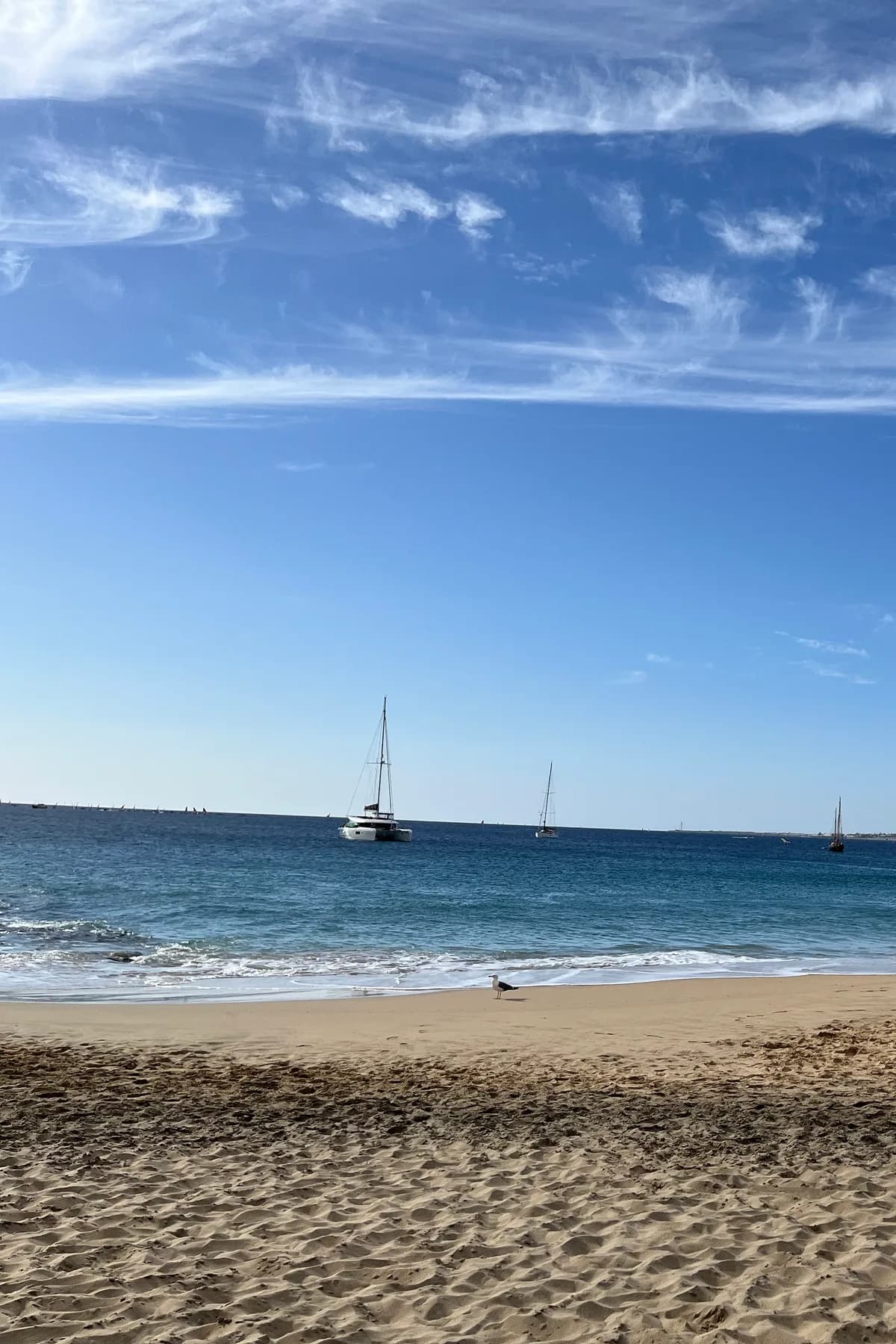
January: 21 degrees. August: 28. Lanzarote's statistics look like they were invented by the tourist board, but they are pure geography. The island floats in the middle of the Canary Current — a cool ocean river flowing down from the north — and beneath the trade winds (los alisios), which ventilate without rest. The result is one of the mildest and most stable climates on the planet: some three thousand hours of sunshine a year, rain on only a few days, a sea that never drops below 18 degrees and no winter worthy of the name. Here you don't ask "what will the weather be like?" but "how much sun do you want today?". One serious warning: that sun, with the breeze covering for it, genuinely burns. Sun cream always — a local friend's word.
Lanzarote's climate is the result of a three-way geographical carom, and understanding it makes the trip more interesting — and the suitcase easier to pack.
First cushion: the latitude. The island sits level with the Sahara; in pure theory, it should be an oven. Second cushion: the ocean that saves it. The Canaries float in the middle of the Canary Current, a branch of the great North Atlantic circuit that brings temperate-cool waters down from higher latitudes. That ocean river wraps the island in a sea that swings only between 18 degrees in winter and 23 at the end of summer — and a sea that stable is a giant thermostat: it cools the air in August, warms it in January and strips the climate of any temptation towards extremes. Third cushion: the trade winds (los alisios), the permanent north-easterly ventilation, explained in detail in their own card, which finish the job.
The result is a climate the meteorologists cite among the mildest in the world. Daytime highs move for most of the year between 21 and 29 degrees; nights, between 14 and 21. There is no cold season — the Lanzarote "winter" is a spring with cool nights — and serious heatwaves are short visits, almost always with calima (Saharan dust haze). The rain? A rumour: little more than a hundred millimetres a year concentrated into a handful of days between December and February, often in brief showers with a rainbow thrown in. And the sun: around three thousand hours a year, on the European podium. That's why here everything "can be done" all year round: beach at Christmas, hiking in August (early, and with water), cycling in any month.
Now, the small print a local friend never leaves out. One: the sun at this latitude is genuinely strong, and the breeze is a liar — you don't feel the heat, but the UV index is high most of the year, even under cloud. Cream, cap and sunglasses are not brochure advice: they are equipment. Two: the breeze that cools the beach at midday can call for a light jacket after nightfall, especially in winter — the secret is dressing in layers, like a summer onion. Three: the sea is clean and mild, but it is open Atlantic — respect the flags and the currents, especially on the north and west coasts.
With those three rules learned, you're already thinking like an islander: here the climate isn't a topic of conversation — it's a reliable partner. The kind that doesn't let you down a single day of the year.