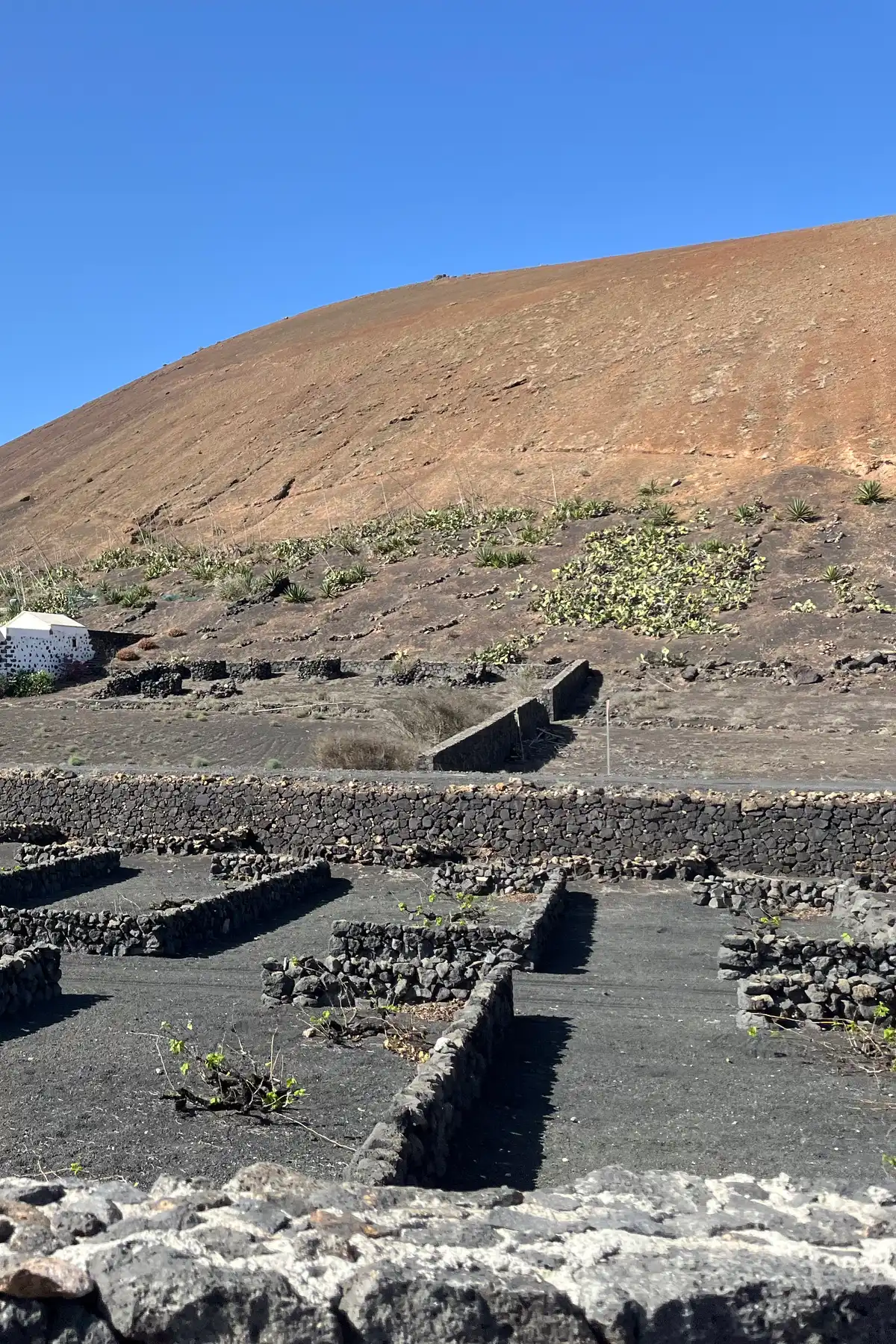
After the great eruptions buried their fields, Lanzarote's farmers did something between genius and defiance: they dug through the ash and planted vines in the ground beneath. The result is La Geria — thousands of funnel-shaped hollows in black picón, each sheltering one vine behind a low stone crescent, a landscape so improbable it looks designed. It works because the ash is a sponge: it drinks the night's humidity and feeds it to the roots, no irrigation needed. From this moonscape comes malvasía volcánica — crisp, saline, mineral whites that win international medals — harvested from July, among the earliest in Europe, and made in bodegas that include the oldest winery in the Canaries, pouring since 1775. Toured, tasted and best at sunset, when the black hollows fill with gold.
Wine regions usually advertise their soil. Lanzarote's most famous vineyard barely has any — and that's the whole point. When the six-year eruptions of the 1730s ended (the fire chronicle card tells that story), a third of the island's best farmland lay under metres of volcanic ash. Starvation logic produced the experiment: dig down through the picón to the buried soil, plant a vine, and see. The vine didn't just survive — it thrived, because the ash layer turned out to be a perfect dry-farming machine: it soaks up dew and the humidity of the trade-wind nights, insulates the soil against evaporation, and keeps weeds out. The farmers systematised the miracle into the hoyo: a conical pit up to two or three metres wide, one vine at the bottom, a semicircular wall of lava stones — the zoco — guarding it from the wind. Multiply by ten thousand, brush the slopes of the fire mountains behind, and you have La Geria: agriculture as land art, a century before anyone coined the term.
The grape that rules here is malvasía volcánica, a local variety of the malvasía family that once made "Canary" the toast of Shakespeare's London. Grown in ash, it produces whites unlike anywhere else: bone-dry versions with green apple, smoke and a saline finish that sommeliers describe with the word "volcanic" and mean it; barrel and sweet versions for the patient. Alongside it: listán negro for reds and rosés, diego, moscatel. The island's growers work under their own Denominación de Origen, and the calendar delivers a quirk that delights wine writers — because the ash warms early and the vines hug the ground, harvest can begin in July, among the first grapes picked in all of Europe. There is even a night-harvest festival to beat the heat.
Visiting is gloriously easy: the wine route strings bodegas along the La Geria road, from grand old houses — including El Grifo, founded in 1775, the Canaries' oldest working winery, with a museum of presses and a label drawn by César Manrique — to small family cellars where the tasting happens between the tanks. Tour, taste, buy a bottle of dry malvasía for tonight and a sweet one for home. Two etiquette notes with teeth: never walk into the hoyos or climb the zocos for a photo — each is a farmer's livelihood and repairs are done by hand — and if you're driving the wine route, remember the island's roads are lovelier sober. Best hour: the last one before sunset, when low light turns every black funnel into a crescent of gold and the whole valley looks like what it is — the most beautiful answer anyone ever gave a volcano.