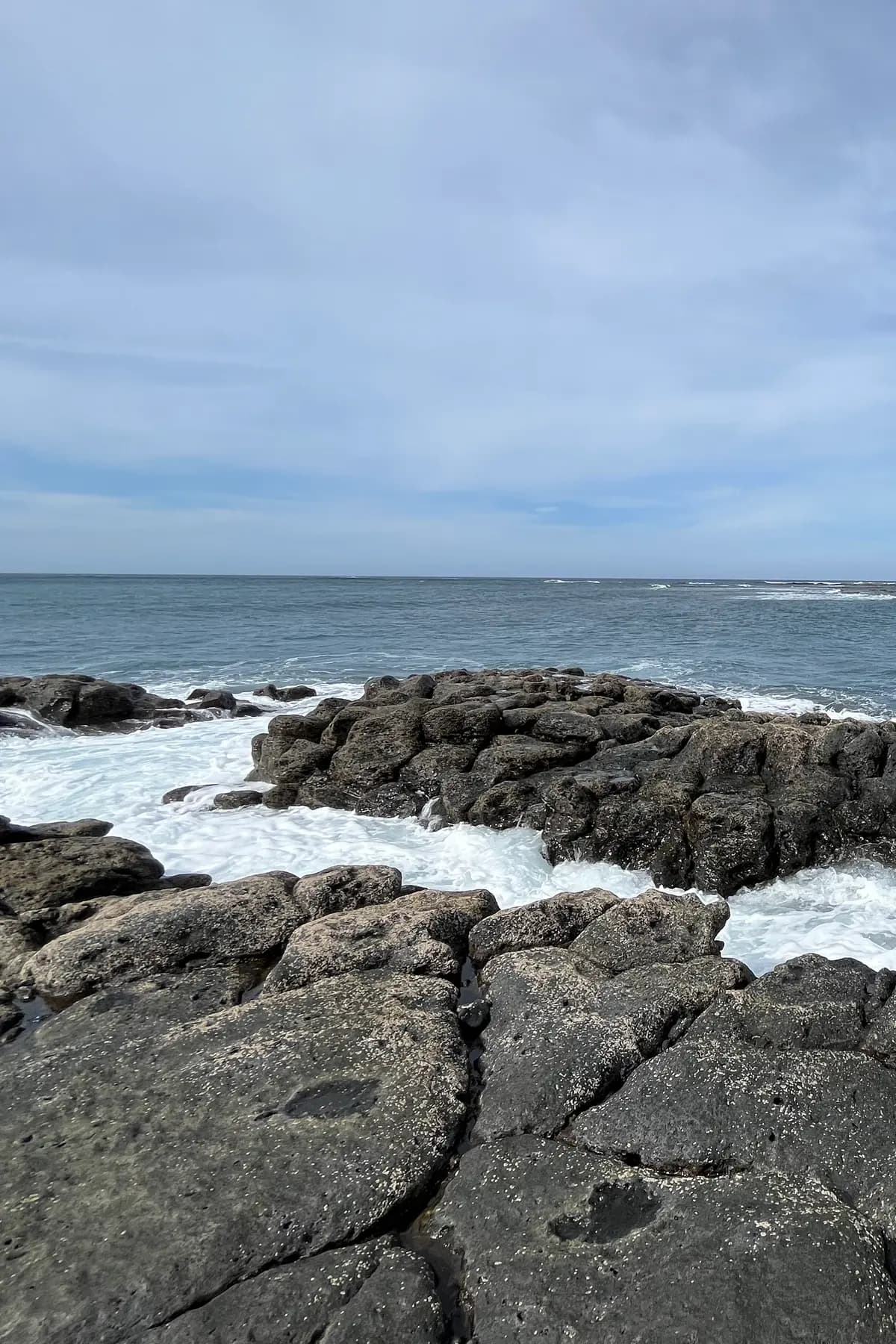
The Atlantic around Lanzarote is generous but not decorative — it's a working ocean, and it rewards the ninety-second briefing most visitors never get. The system: flags on lifeguarded beaches are law (green go, yellow caution, red no — and "no flag" means no lifeguard, not no danger). Coasts have personalities: east and south (Playa Blanca, Papagayo, Puerto del Carmen) are the gentle family; the west and north (Famara above all) are surf coasts with rip currents that take swimmers seaward — Famara is for walking and surf schools, not casual swimming, and locals treat that as common knowledge. Shore-break days can slam even paddlers. If caught in a rip: don't fight it, swim parallel to shore, then in. Charcos and tide rules have their own card. Respect costs nothing and buys everything.
Almost every serious scare on the island's coast follows the same script: a calm-looking sea, an unguarded beach, and a visitor who didn't know the local grammar. This card is that grammar — five minutes that outperform any amount of luck.
Start with geography, because the island's coasts genuinely have characters. The eastern and southern shores — Costa Teguise's coves, Puerto del Carmen's long sands, Playa Blanca and the Papagayo bowl (card 79) — sit in the island's lee: trade winds blow offshore-ish, swell arrives filtered, and these are rightly the family beaches, most with lifeguards in season. The west and north face the open Atlantic's engine room. Famara — six golden kilometres, the island's most beautiful beach and its most consistently dangerous swim — takes ocean swell head-on across shallow sandbars: paradise for surf schools in the whitewater, notorious for rip currents beyond it. The red flag is Famara's semi-permanent decoration, and the sentence every islander knows — you walk Famara, you surf Famara, you don't swim Famara — isn't gatekeeping; it's the accident statistics talking. The same logic applies to the wild west (Janubio, El Golfo's coves, Los Charcones on rough days — card 78) and the north shore outside its sheltered pockets.
Now the mechanics, briefly and usefully. Rip currents are rivers of returning water: they form where waves pile water inside sandbars or rocks, and they flow seaward through gaps — often looking deceptively like the calmest, darkest, foam-free strip of an otherwise white sea. That's the trap: the "quiet lane" is the conveyor belt. Caught in one, the survival choreography is famous and works: don't fight seaward pull head-on (exhaustion is the real enemy — rips pull you out, not under), swim parallel to the beach until you're out of the river's width — usually a few dozen metres — then angle back in with the waves; if you can't make progress, float, wave an arm, shout. Shore break — waves collapsing directly onto steep sand, common on Famara and swell days elsewhere — has its own rule: never turn your back on it in the impact zone, and keep small children out of the wet sand lip when it thumps.
The system that ties it together: bathe at lifeguarded beaches when you're not sure (the island's main resorts run seasonal services with the flag mast as headquarters); read the flag as a contract, including yellow — waist-deep, feet touching, honestly; treat no-flag beaches as self-service with your judgement as lifeguard; and borrow local eyes shamelessly — where the families with coolers set up is the day's safe zone, and an empty beautiful beach on a windy day is empty for a reason. Layer on the tide card's charco rules and the surf cards' etiquette, and the whole coastline opens up to you — including, on gentle days, the wild side's magic. The Atlantic here isn't out to get anyone. It just assumes you've read this card.