LMA

Ajaches: the grand old mountains hiding behind Papagayo

Lanzarote · 3 min read

Ajaches: the grand old mountains hiding behind Papagayo

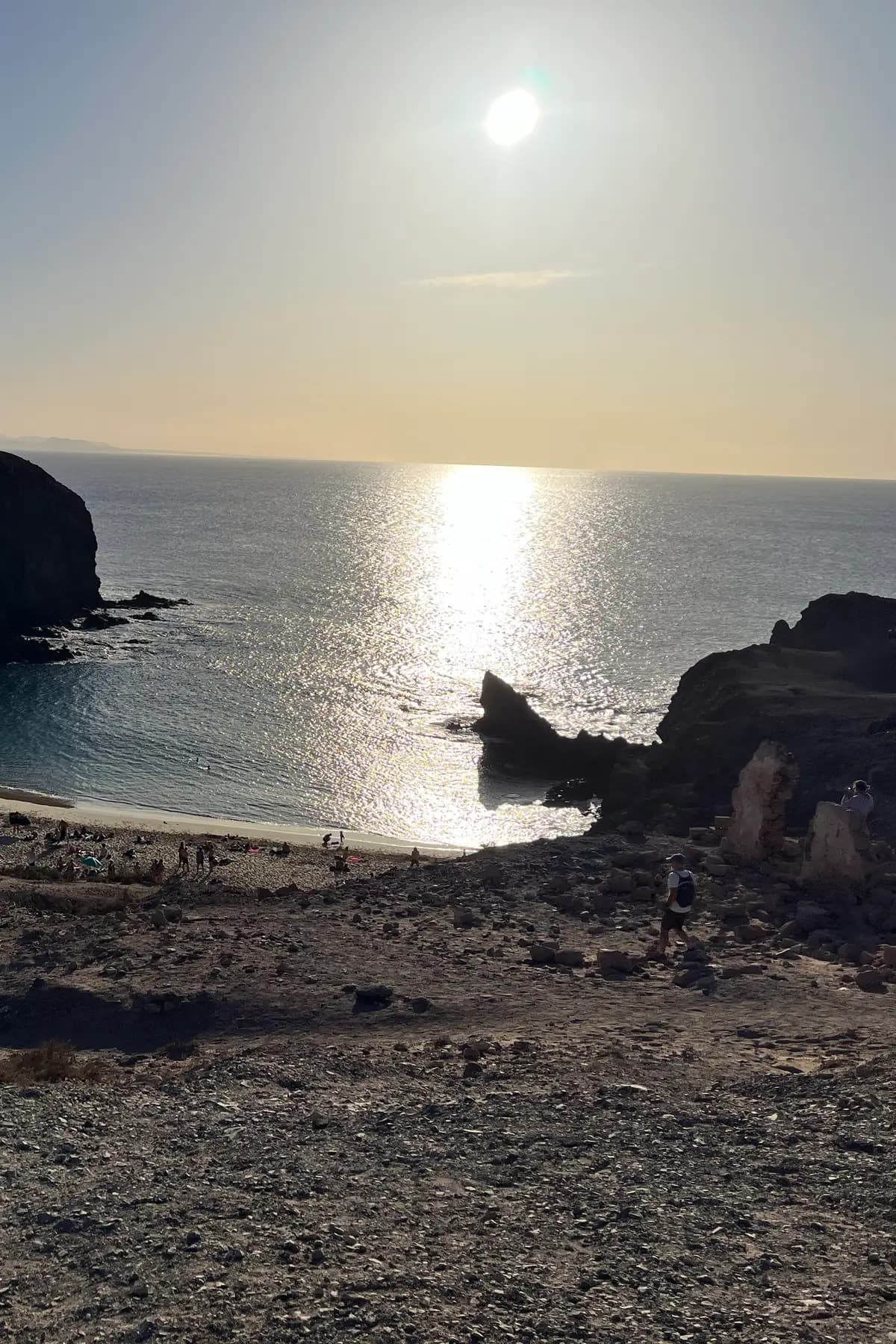
The oldest thing you'll touch on Lanzarote isn't in a museum: it's the worn, elegant mountain country behind the Papagayo coves. Los Ajaches are the island's founding massif — lavas dating back roughly fourteen million years, eroded from Alpine ambitions down to smooth ochre shoulders and deep dry valleys. The classic ways in: the ridge walk from the whitewashed saddle village of Femés (its balcony over Playa Blanca is a card-worthy view by itself) towards Pico Redondo and the heights above the sea, or the coastal valleys — barrancos with names like Parrado and Higuera — that drop walkers to empty coves the drivers never see. Old goat paths, lichened stones, falcons, silence. Wear real shoes, carry real water. This is the island before the fireworks — and it has aged magnificently.

Timanfaya gets the fame for being young; Los Ajaches deserve respect for being first. Together with the Famara massif in the north, these southern highlands are a founding block of the island — part of the shield that rose from the Atlantic around fourteen to fifteen million years ago (the island's birth certificate card tells the deep-time story). Everything dramatic about them has already happened: the raw peaks have been rounded, the gullies deepened, the surfaces patinated into that tawny, lion-skin smoothness that only tens of thousands of millennia of wind and occasional rain can polish. Geologists prize the massif as an open book of old-island anatomy; walkers get something simpler — the only place on Lanzarote that feels like true mountain country, minutes from the resorts.

Femés is the gateway and the aperitif. The village sits in a saddle at about 350 metres between Atalaya and Pico de la Aceituna, white houses around one of the island's oldest church sites — the humble Ermita de San Marcial del Rubicón, heir to the conquest-era cathedral of the south (the 1402 card tells why a bishopric landed on this dry corner). The plaza's balcony hangs over the entire southern plain: Playa Blanca spread below, Fuerteventura and Lobos floating beyond the strait — at sunset, one of the island's great free grandstands, with two modest restaurants serving goat cheese from the actual neighbourhood goats.

The walking menu ranges honestly. The ridge classic climbs from Femés along the old shepherd track towards Pico Redondo and the high line above the coast — far views both ways, ravens and kestrels below eye level, two to three unhurried hours out and back. The through-route drops from the heights into the Barranco de Parrado or its siblings, dry valleys walled in warm stone that funnel you down to the quiet ends of the Papagayo shore (card 79) — a brilliant one-way plan with a swim as destination and a taxi or pre-parked car as logistics. Softer options skirt the massif's skirts from Playa Blanca's edge or Las Coloradas. Everywhere, the furniture is the same: abandoned terraces and stone corrals from the goat-herding centuries, lichens painting the north faces (the pioneers-of-life card explains those crusts), aulagas and scented salvias, and a quality of silence the young lava fields, oddly, don't have — theirs is eerie; this is peaceful.

Field notes: paths are old and mostly unsigned — a mapping app with the track downloaded is your friend; there is zero water and zero shade, so morning starts and two litres are the rule; the surface is loose stone in places — trainers minimum, boots better; and the massif is protected as a natural monument: no shortcuts across slopes, no cairn-building, gates closed behind you where herds still graze. The Ajaches don't perform. They simply remember — and a morning up there recalibrates the whole island: the fireworks of Timanfaya are the youth; this is the long, calm adulthood every volcano dreams of.

Discover Lanzarote with LMA

More stories

An Island Carved by NatureWhite, Green and Volcanic: The Architecture of LanzaroteCésar Manrique: The Artist Who Shaped an IslandAn Ocean of AdventuresLife Beneath the WavesA Thousand Years of StoriesThe Taste of a VolcanoA Beach for Every MoodWine Grown in AshThe Island That Chose RestraintThe People Who Made This IslandThe Fire Mountains600 degrees beneath your shoesMalpaís, lajial, hornitos: learn to read the lavaFarming without rain: the peasant engineering that amazes the worldThe devil of Timanfaya and the Virgin who stopped the lavaThe cochineal: the insect that dyed half of Europe redIllustrious visitors: a palace gifted between kings and the house Omar Sharif lost at cardsTides: the ocean breathes twice a dayBeyond tourism: what the island exportsThe eternal spring: why it's never cold here — nor too hotAloe vera: the island's green pharmacyLa Graciosa: the eighth island, no tarmac and no hurryErmita de las Nieves: the top of the wall (and the island's oldest weather report)When it rains (yes, it happens): the island's rarest spectacleUnder the darkest sky: stargazing on the volcano islandWine from the ashes: La Geria and the miracle of malvasía volcánicaSpeak like a conejero: little words that open the islandTimple, isas and the Rancho de Teguise: the island's soundtrackWhat the names mean: reading the map's oldest language1852: the year the islands went duty-free (and why your shopping still is)Europe's biggest marine reserve is right next doorCaletón Blanco: white sand on black lava (the north's little Caribbean)Playa del Risco: the beach you have to earn (or the island's best-kept walk)The island's guardians: the projects that look after itReading the ocean: flags, currents and swimming like a localPlan B: the art of the "bad-weather" day (a user's manual)The suitcases to Havana: when conejeros crossed the seaBeyond La Graciosa: Alegranza, Montaña Clara and the wild end of the worldArrecife: the capital that grew out of a puddle (a love letter)The natural pools: Punta Mujeres, Los Charcones and the art of the charcoPapagayo done properly: the golden coves without the golden crowdsThe north loop: palms, cliffs and the island's greenest morningEat where the boats land: a fish-village crawlThe sunset circuit: five ways the island ends a dayThe Stratified City: the labyrinth the wind carved (and nobody visits)Where astronauts learn to walk on other worldsIllustrious islanders: Einstein's physicist, the voice of "El talismán" and the barber of HaríaWhite gold: the salt pans that fed half a fleetThe island the pirates wouldn't leave in peaceWho lives on the island (and who visits it)?The island's calendar: a whole year of fiestas and eventsWhat exactly is the calima?Puerto del Carmen: the little fishing village where it all began (and the parrots' corner)Fifteen million years: the veteran of the archipelagoThe blind crab: white, tiny and found nowhere else on EarthThe hanging garden of FamaraSan Borondón: the island that appears and disappearsSurviving without rain: the tricks of the coastal plantsThe island's table: gofio, mojo and the art of honest cookingSurfing: El Quemao, Famara and the wave the champions respectCycling: the professionals' winter gymLichens and tabaibas: how life comes back after a volcanoTeguise beyond the market: six centuries in white and basaltThe wind that explains (almost) everythingHalf a volcano, a green lake and a roaring coastlineThe lava tunnel that runs into the seaCreatures from another world beneath your feetSweet endings: quesillo, bienmesabe and the little glass that followsA river of sand crosses the island (and it doesn't come from the Sahara)Tales of the Timanfaya devilSailing: navigating the sea of the trade winds