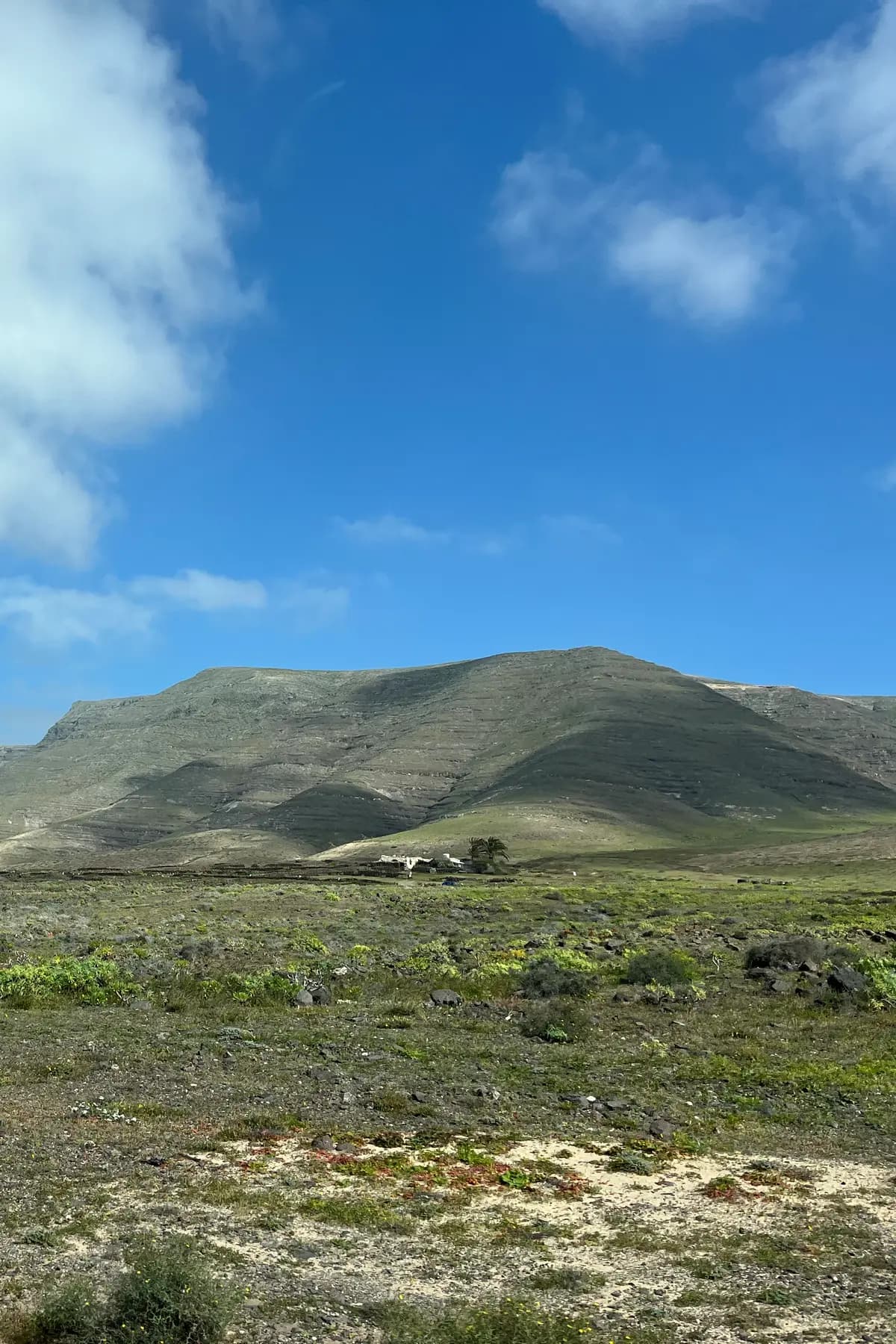
A handful of days each winter, the impossible occurs: real rain on Lanzarote. Don't sulk — celebrate. Rain here is an event with its own rituals: locals stand in doorways watching it like fireworks; the barrancos briefly remember they're rivers; waterfalls appear on the Famara cliff for a few glorious hours; and within a fortnight the island performs its greatest magic trick — a green flush over the volcanic plains, poppies and wild mustard in the ash fields, La Geria's vines glowing against black picón. February after a wet January is the island's secret best month. So if clouds burst on your holiday: drive north, watch the cliff run silver, then come back in ten days if you can. You'll have seen something many repeat visitors never have.
The numbers first, because they explain the emotion: Lanzarote averages very roughly 100-150 mm of rain a year — one good Alpine afternoon — nearly all of it concentrated in a few episodes between November and March, when Atlantic lows finally muscle past the trade-wind regime (the alisios card explains why that regime usually wins). Years pass with barely a proper soaking. So when the sky finally opens, the island doesn't grumble like London — it steps outside. You'll see it: neighbours in doorways filming, children released into puddles, farmers making calls with the tone of men watching money fall from the sky. Which, historically, it is: the whole ingenious dry-farming apparatus — the ash mulching, the cisterns, the maretas (the water card and the farming card tell those stories) — exists to catch and stretch exactly these hours.
What to actually do with a rainy day, ranked by wonder. One: head for the Famara massif and the north. The great cliff drains fast and theatrically — ephemeral waterfalls thread the basalt walls, sometimes blowing back upward in the wind, and the valley of Haría smells suddenly of wet earth and palms: the island's best perfume, available some years never. Two: watch a barranco run. The dry ravines carry water for hours, not days — from safe high ground, seeing the Barranco de Tenegüime or the gullies off the cliffs actually flowing is local-legend material (and the flash-flood rule is absolute: never walk or park in a channel while it rains in the highlands). Three: give the lava fields twenty minutes — rain-dark picón turns absolute black, the lichens (their card) flush from grey to green almost while you watch, and the smell of wet volcanic rock, petrichor's mineral cousin, is worth the wet socks.
Then comes the encore, and it's the real show: the greening. Within one to three weeks of decent rain, dormant seeds detonate across the island — a haze of grass over plains that were bare rock a fortnight before, wild mustard yellowing whole hillsides, poppies against black ash, the vineyards' first leaves electric against the picón. The Ajaches (card 86) and the Femés valleys turn briefly, absurdly, Irish; even Timanfaya's borders soften. Photographers who know book late-February flights on gut instinct and rainfall apps. By April or May the sun reclaims everything and the island returns to its bronze default — the greening is a limited edition, no reprints.
Practical footnotes: rain days are also museum days (the Manrique houses, the piracy castle, Arrecife's galleries — the culture cards approve); driving needs gentleness, since oil-slicked dry roads plus first rain equals the island's slipperiest hours; and the calima card's dusty sibling — muddy rain, when Saharan dust falls with the drops and paints every car beige — is its own collectors' item. Mostly, though: adjust the attitude. You didn't lose a beach day. You won a day that most of the island's ten million annual sun-seekers will never see.