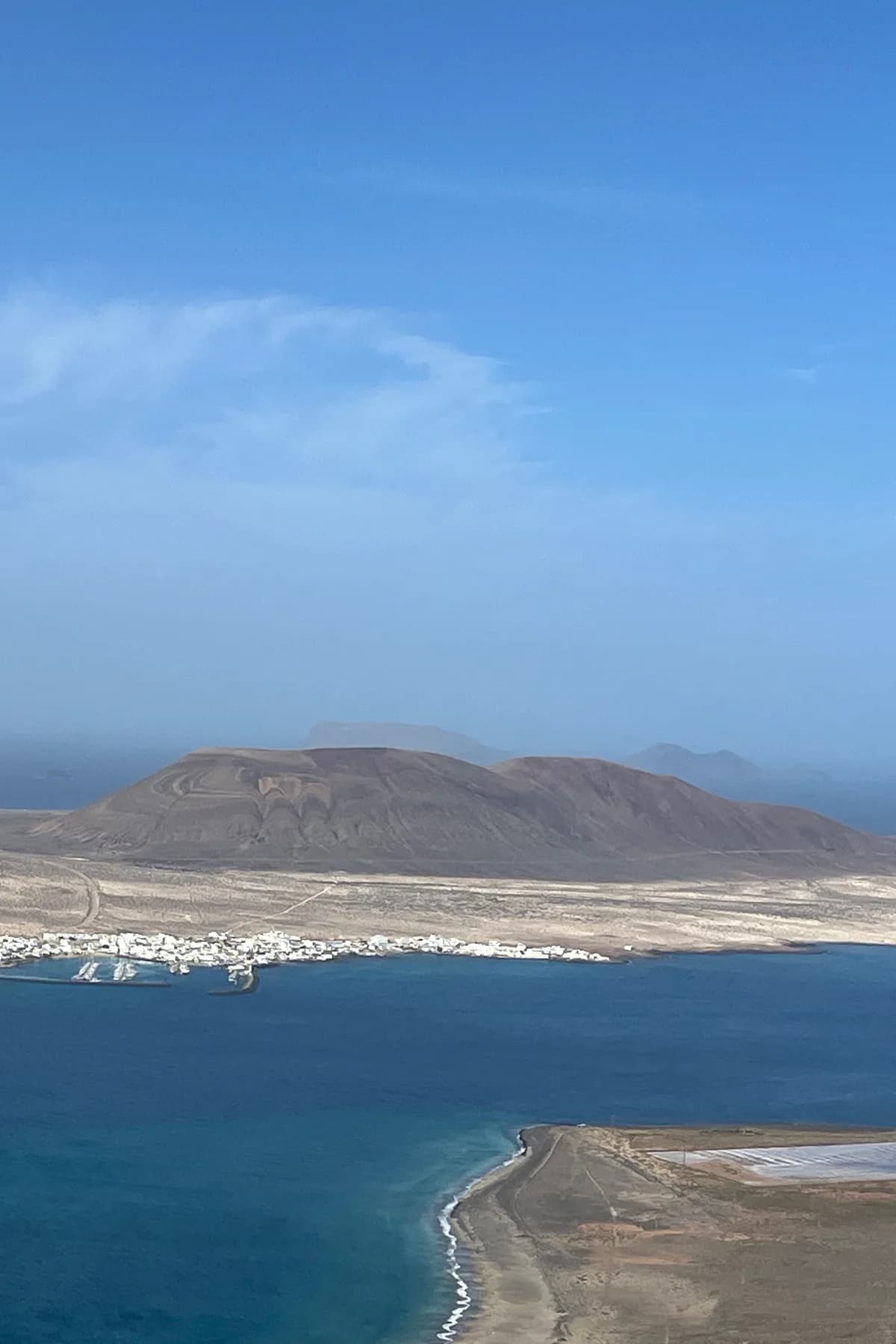
North of La Graciosa the map keeps going: Montaña Clara, a half-drowned crater you could walk across in an hour; the Roque del Oeste and Roque del Este, fangs of rock in open ocean; and Alegranza — "Joy" — the archipelago's true full stop, a private-feeling wilderness of one grand volcano, one heroic lighthouse and several thousand seabirds. Together with La Graciosa they form the Chinijo Archipelago, the largest marine reserve in Europe (that card exists) and a sanctuary so strict that landing on the smaller islets is forbidden without scientific permission. You visit them the right way: from a boat deck or from the Mirador del Río, watching Alegranza's lighthouse blink at dusk. Some places are best loved from exactly this distance — and knowing their stories makes the view three islands deeper.
"Chinijo" is local speech for "small" — the chinijos are also the island's children — and the name fits an archipelago that works like Lanzarote's nursery: small islands, big biology, minimal humans. La Graciosa, the only inhabited one, has its own card and its sandy streets. This card sails past it, to the ones almost nobody touches.
Montaña Clara is the miniature: a single pale volcanic cone, its crater breached by the sea, barely a square kilometre of slopes where nothing taller than a shrub survives the wind. It once endured attempts at farming and even a short-lived scheme or two; nature repossessed it decisively, and today it belongs to the birds and the botanists who visit under permit. The two Roques — West (also called Roque del Infierno, "Hell's Rock") and East — are even purer: sheer stacks in open water, breeding fortresses for seabirds, unlandable by anything without wings.
Alegranza is the character. The northernmost point of the whole Canary archipelago: a broad, handsome caldera nearly three hundred metres high anchoring a scrubby plain, ringed by cliffs the Atlantic works on with intent. Its name — "joy" — is said to record the mood aboard the 1402 conquest fleet at their first Canarian landfall; the island then spent centuries as a corsairs' waiting room (fleets lurked here for the Indies ships; the pirates card's villains knew these anchorages well), a rabbit-hunting and orchilla-gathering ground, and eventually private property — it still technically is, within the natural park's strict rules. Its monument is the Faro de Punta Delgada, a proud 1860s lighthouse whose keepers lived out here with supply boats their only thread to the world — island stoicism distilled. Automated now, its beam still sweeps the strait each night.
Why the strictness? Because the Chinijo islets are one of the last great seabird strongholds of the eastern Atlantic: thousands of pairs of Cory's shearwaters — whose eerie night calls you can hear from northern Lanzarote in summer — with storm petrels, Bulwer's petrels, shearwaters, ospreys and Eleonora's falcons timing their breeding to the migration flows. Egg raids and rats did historic damage; protection is the repair. Landing without authorisation isn't just illegal, it's genuinely harmful — a single loose dog or careless step in a burrow colony undoes years.
How to meet them properly: boat excursions and fishing charters from Órzola or Caleta de Sebo circle the islets in calm weather (binoculars transform the trip); the Mirador del Río and the cliff-top path serve the full panorama with Alegranza floating at the edge of sight; and at dusk from Órzola, watch for the lighthouse's pulse. The islands' whole job now is to be left alone. Watching them do it is strangely moving.