
 Welcome
Your adventure navigator
A free travel companion for the destination you are in. Here is how it works:
Swipe the destination
One card per screen — places worth going to and local stories. Swipe up for the next one, sideways to read more.
Collect your stamps
Visit a place, add a photo — that is a stamp in your Pass. No GPS, no deadline, at your own pace.
Walk the route you actually built
Save favorites from the feed, drop them on today's route and open it straight in Google Maps.
Free to start
Sign up in seconds to save favorites and start your collection.
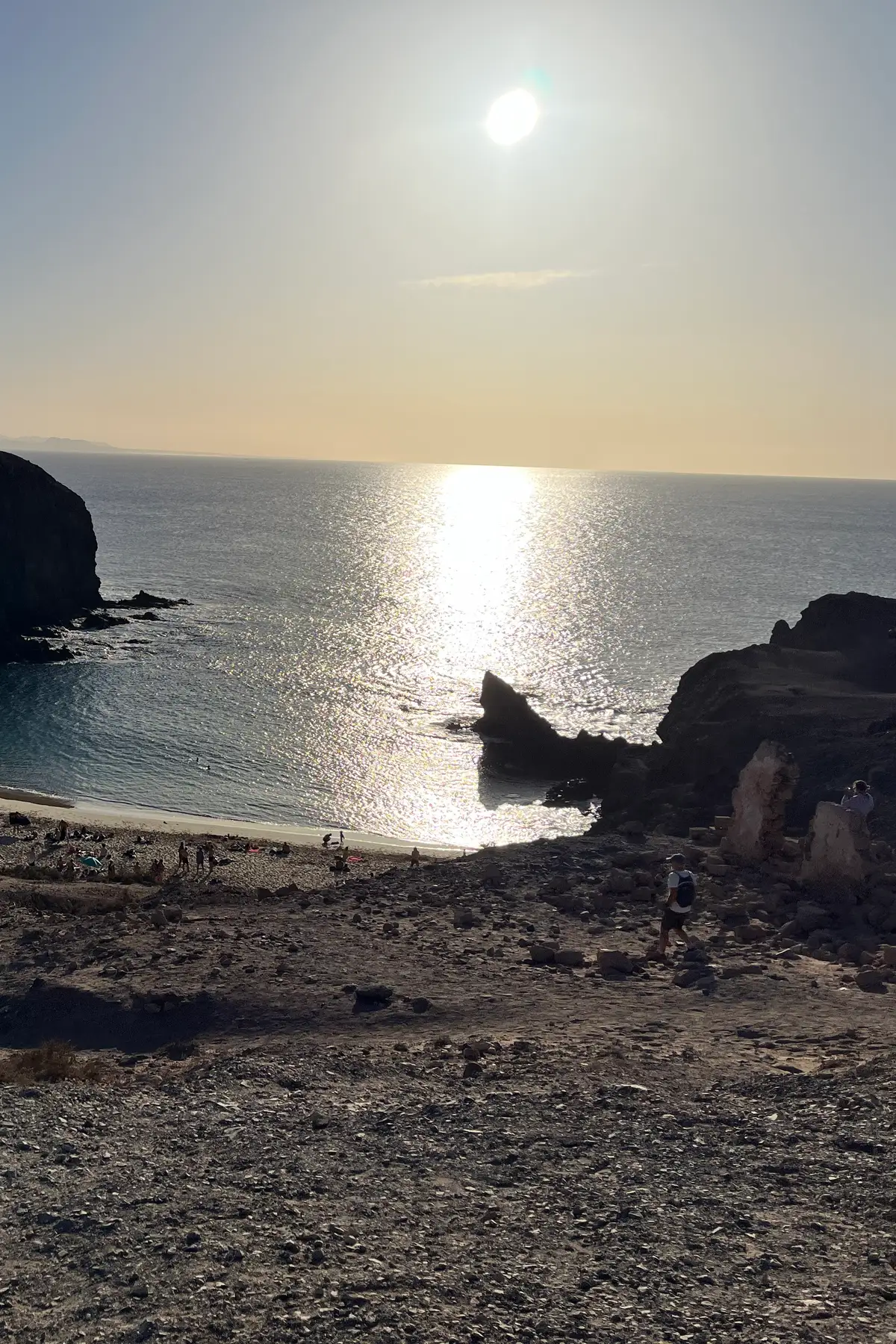
Ajaches: the grand old mountains hiding behind Papagayo
The oldest thing you'll touch on Lanzarote isn't in a museum: it's the worn, elegant mountain country behind the Papagayo coves. Los Ajaches are the island's founding massif — lavas dating back roughly fourteen million years, eroded from Alpine ambitions down to smooth ochre shoulders and deep dry valleys. The classic ways in: the ridge walk from the whitewashed saddle village of Femés (its balcony over Playa Blanca is a card-worthy view by itself) towards Pico Redondo and the heights above the sea, or the coastal valleys — barrancos with names like Parrado and Higuera — that drop walkers to empty coves the drivers never see. Old goat paths, lichened stones, falcons, silence. Wear real shoes, carry real water. This is the island before the fireworks — and it has aged magnificently.
Ajaches: the grand old mountains hiding behind Papagayo
The oldest thing you'll touch on Lanzarote isn't in a museum: it's the worn, elegant mountain country behind the Papagayo coves. Los Ajaches are the island's founding massif — lavas dating back roughly fourteen million years, eroded from Alpine ambitions down to smooth ochre shoulders and deep dry valleys. The classic ways in: the ridge walk from the whitewashed saddle village of Femés (its balcony over Playa Blanca is a card-worthy view by itself) towards Pico Redondo and the heights above the sea, or the coastal valleys — barrancos with names like Parrado and Higuera — that drop walkers to empty coves the drivers never see. Old goat paths, lichened stones, falcons, silence. Wear real shoes, carry real water. This is the island before the fireworks — and it has aged magnificently.
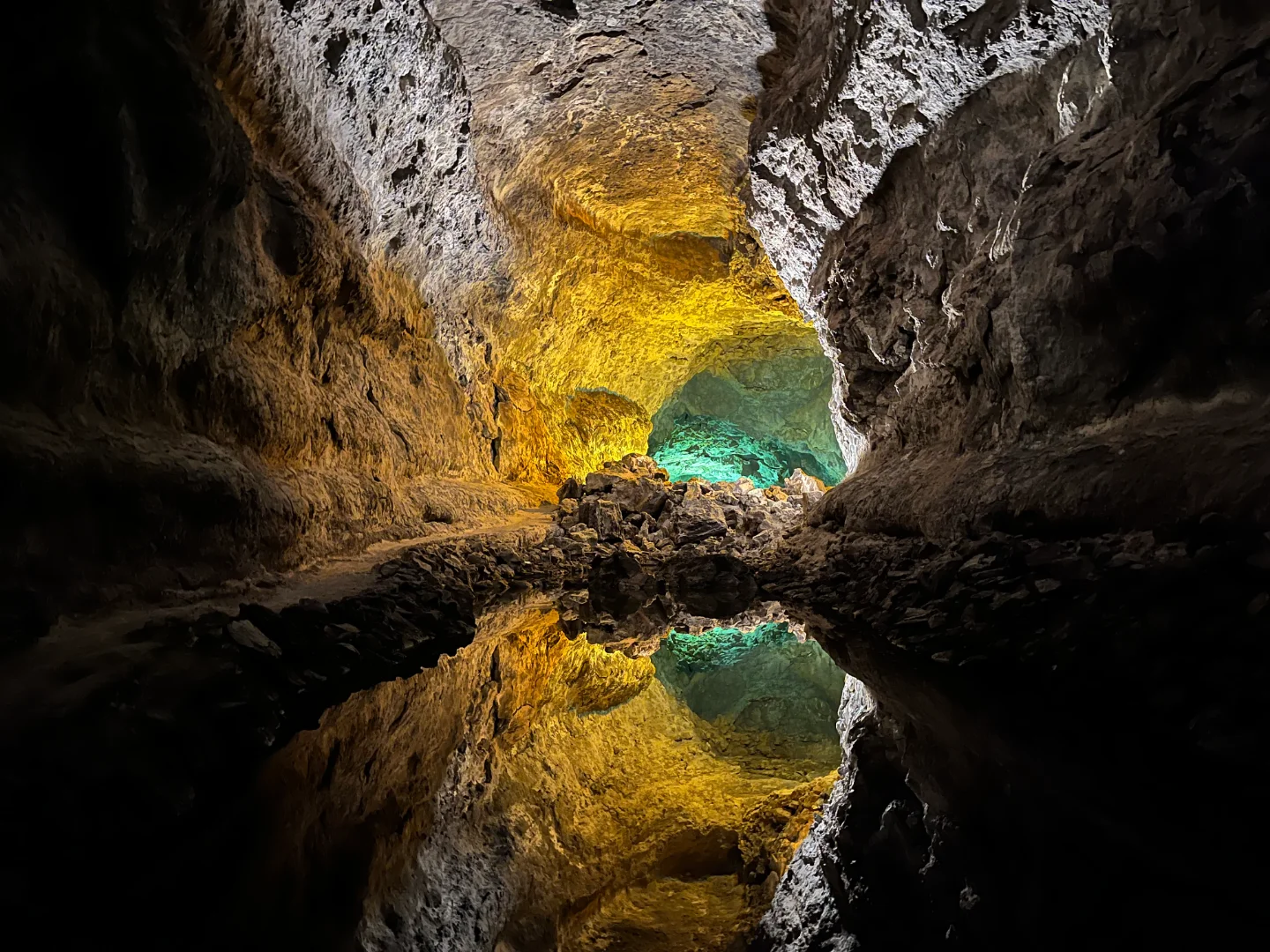
The Fire Mountains
For six years in the 1730s, Lanzarote lived inside a volcanic eruption. Beginning in 1730, the earth opened again and again in the west of the island, and rivers of lava slowly buried villages, farmland and everything else in their path. A local priest, Andrés Lorenzo Curbelo, wrote down what he saw: mountains rising where there had been plains, night skies lit red, the sea boiling where lava met water. When the eruptions finally ended in 1736, roughly a quarter of the island lay under a new skin of lava and ash.
Famara & Teguise
No photos, no spoilers — go and discover it for yourself.
8 places
Swipe to see them
Famara & Teguise · 1/8
Castillo de Santa Bárbara · Museo de la Piratería
A pirate-era castle on a volcano rim above Teguise.
Famara & Teguise · 2/8
Caleta de Famara — povoação
Sandy streets and surfboards beneath the Famara cliffs.
Famara & Teguise · 3/8
Ermita de Las Nieves
A white chapel alone on the heights above Famara.
Famara & Teguise · 4/8
La Santa
A fishing village with a famous reef break offshore.
Famara & Teguise · 5/8
Mirador del Bosquecillo
The whole Famara bay from a grove atop the cliffs.
Famara & Teguise · 6/8
Playa de Famara
A long, wild beach beneath a wall of cliffs.
Famara & Teguise · 7/8
Casa-Museo del Timple (Teguise)
The story of the timple, the Canaries' little guitar.
Famara & Teguise · 8/8
Villa de Teguise — casco histórico
The island's former capital, its old streets intact.
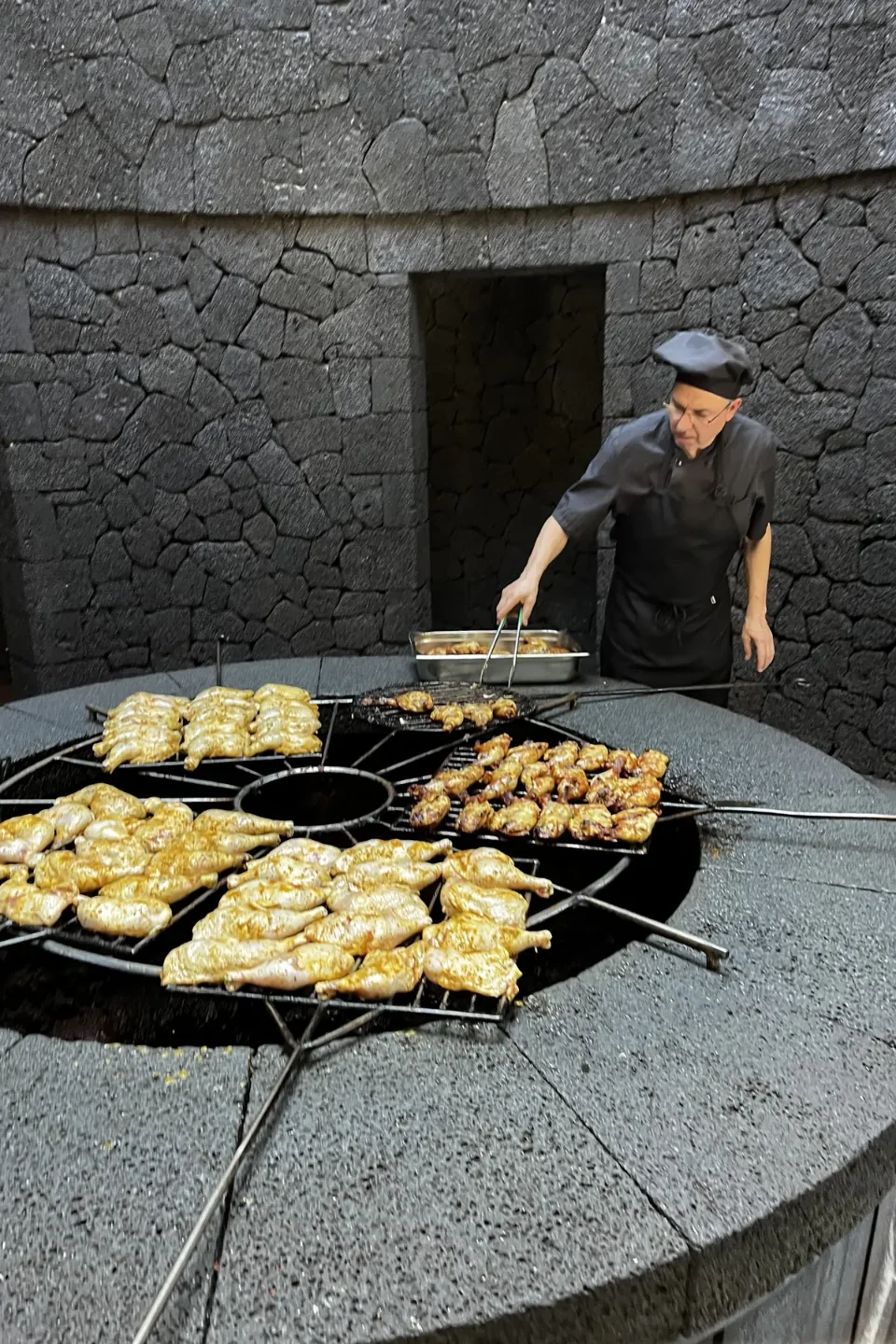
The Taste of a Volcano
Canarian food is what happens when an island has to feed itself from black gravel, goats and the Atlantic. There is nothing fussy about it: the ingredients are few, the techniques are old, and the results are addictive.
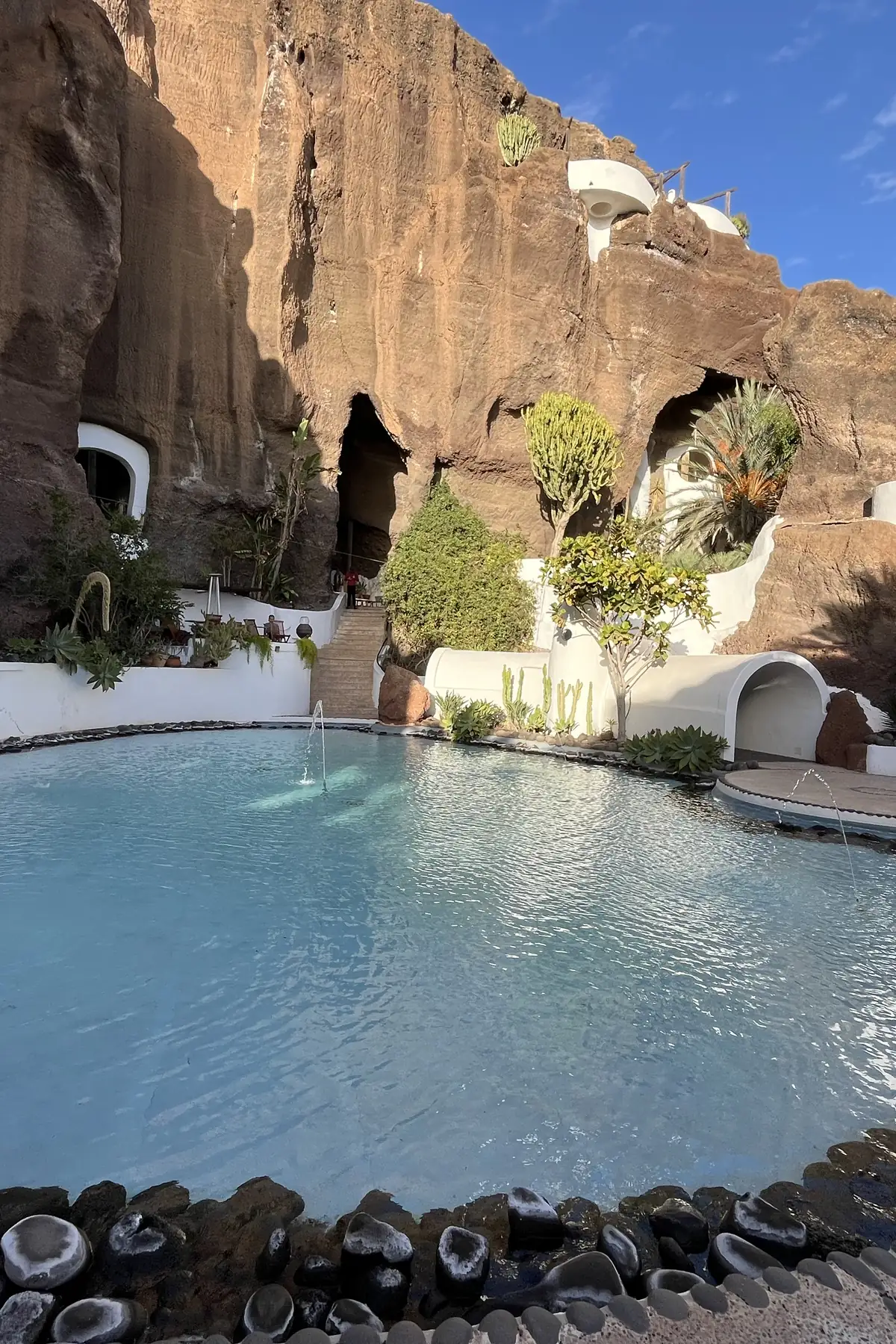
Museums of Lanzarote
From Manrique's house to a museum under the sea. The essentials, with a link to each official page.
22 museums
Swipe to see them
Museums of Lanzarote · 1/22
A Casa José Saramago
Home of the Nobel laureate in Literature (A Vigia)
Tías
solo con reserva
Museums of Lanzarote · 2/22
Casa Ajei
Culture and crafts house, exhibitions and events
San Bartolomé
habitualmente gratis
Museums of Lanzarote · 3/22
Casa Museo César Manrique
The artist's last home
Haría
consultar · combinado con la Fundación 15 €
Museums of Lanzarote · 4/22
Casa Museo del Campesino
Rural ethnographic museum and Monument to Fertility
Mozaga (San Bartolomé)
gratis
Museums of Lanzarote · 5/22
Casa-Museo del Timple
The Canarian timple (Spínola Palace)
Teguise
consultar
Museums of Lanzarote · 6/22
Centro de Visitantes de Mancha Blanca
Volcanology and the 1730-36 eruption, gateway to Timanfaya
Mancha Blanca (Tinajo)
gratis
Museums of Lanzarote · 8/22
Fundación César Manrique
The artist's house-studio (Taro de Tahíche)
Tahíche (Teguise)
8 € · combinado con Casa-Museo Haría 15 €
Museums of Lanzarote · 9/22
Jameos del Agua
Volcanic cave with auditorium and lake (César Manrique)
Haría
desde 17 €
Museums of Lanzarote · 10/22
Jardín de Cactus
Cactus garden, Manrique's last work
Guatiza (Teguise)
9 €
Museums of Lanzarote · 11/22
La Casa Amarilla
Former Cabildo seat, exhibitions on Lanzarote's memory
Arrecife
consultar
Museums of Lanzarote · 12/22
MIAC — Castillo de San José
International Museum of Contemporary Art
Arrecife
5,40 €
Museums of Lanzarote · 13/22
Mirador del Río
Lookout-artwork over El Río (Manrique)
Haría
9 €
Museums of Lanzarote · 14/22
Montañas del Fuego — Timanfaya
Volcanic national park
Tinajo / Yaiza
30 €
Museums of Lanzarote · 15/22
Museo Aeronáutico
History of Canarian aviation (old terminal)
Aeropuerto (San Bartolomé)
consultar
Museums of Lanzarote · 16/22
Museo Agrícola El Patio
Agricultural and ethnographic museum
Tiagua (Teguise)
consultar
Museums of Lanzarote · 17/22
Museo Atlántico
Underwater sculpture museum (diving)
Playa Blanca (Yaiza)
desde 48 € (buceador certificado) · 149 € (bautismo)
Museums of Lanzarote · 18/22
Museo de Historia de Arrecife
Archaeology and island history (San Gabriel Castle)
Arrecife
habitualmente gratis
Museums of Lanzarote · 19/22
Museo de la Piratería
Pirate history (Santa Bárbara Castle)
Teguise
consultar
Museums of Lanzarote · 20/22
Museo del Vino El Grifo
Wine museum, the oldest winery in the Canaries
La Geria (San Bartolomé)
museo gratis · visita guiada con cata 50 €
Museums of Lanzarote · 21/22
Museo Etnográfico Tanit
Ethnography and traditions of Lanzarote
San Bartolomé
consultar
Museums of Lanzarote · 22/22
Museo LagOmar
House-museum (Omar Sharif's residence) and art
Nazaret (Teguise)
10 € adultos · 8 € niños hasta 12
The island's guardians: the projects that look after it
Behind every intact landscape in Lanzarote there are people at work. The entire island has been a Biosphere Reserve since 1993 — a world pioneer in achieving it with its population included — and a UNESCO Geopark since 2015. At sea, Europe's largest marine reserve protects the Chinijo, the Angel Shark Project studies and defends the angel shark, and the wildlife centres heal turtles and return them to the ocean. On land, every sigh of the volcano is monitored, shearwaters are rescued each autumn with citizens' help, and volunteers clean the coasts at weekends. Even art protects: the Museo Atlántico is a deliberate artificial reef. Want to join in? There are open beach cleans, responsible wildlife watching and projects grateful for every pair of hands. Looking after the island is a local sport — and it's open to new signings.
The island's guardians: the projects that look after it
Behind every intact landscape in Lanzarote there are people at work. The entire island has been a Biosphere Reserve since 1993 — a world pioneer in achieving it with its population included — and a UNESCO Geopark since 2015. At sea, Europe's largest marine reserve protects the Chinijo, the Angel Shark Project studies and defends the angel shark, and the wildlife centres heal turtles and return them to the ocean. On land, every sigh of the volcano is monitored, shearwaters are rescued each autumn with citizens' help, and volunteers clean the coasts at weekends. Even art protects: the Museo Atlántico is a deliberate artificial reef. Want to join in? There are open beach cleans, responsible wildlife watching and projects grateful for every pair of hands. Looking after the island is a local sport — and it's open to new signings.
Aloe vera: the island's green pharmacy
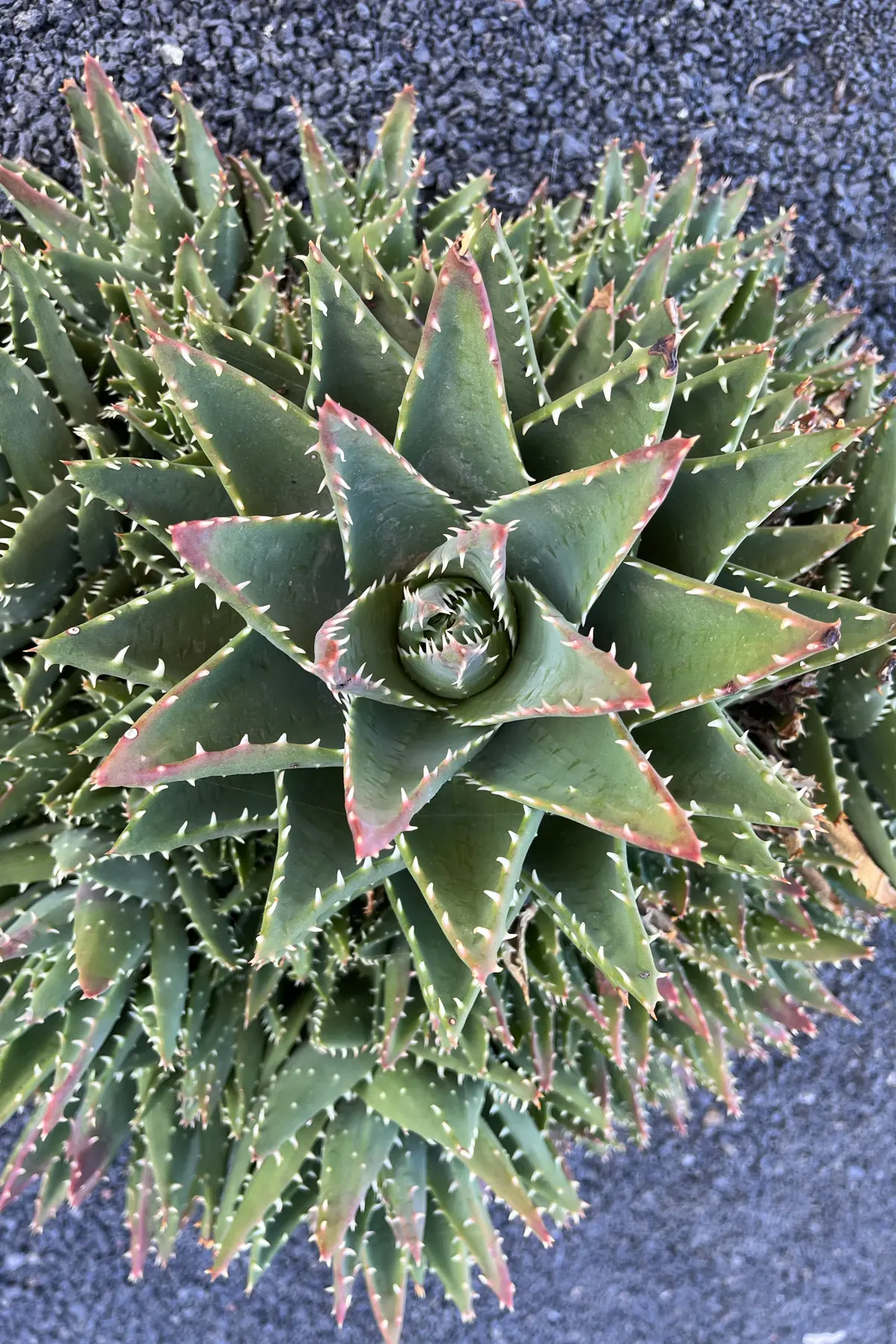
Those plantations of fleshy green rosettes you see across the north and centre of the island are aloe vera — and the Canarian variety has a worldwide reputation. The reason is the climate: intense sun, drought and volcanic soil force the plant to concentrate in its leaves the gel rich in compounds that has made it famous — the same gel that soothes sun-punished skin (a useful fact at this latitude). The islanders have used it for ever: leaf cut, fresh gel, straight onto the burn. Today there are farms you can visit where they show you the plant, the cutting and the product — and one golden rule for buying well: check the percentage of pure aloe and the local origin on the label. A useful souvenir, green and of this land: few souvenirs genuinely heal.
Aloe vera: the island's green pharmacy
Those plantations of fleshy green rosettes you see across the north and centre of the island are aloe vera — and the Canarian variety has a worldwide reputation. The reason is the climate: intense sun, drought and volcanic soil force the plant to concentrate in its leaves the gel rich in compounds that has made it famous — the same gel that soothes sun-punished skin (a useful fact at this latitude). The islanders have used it for ever: leaf cut, fresh gel, straight onto the burn. Today there are farms you can visit where they show you the plant, the cutting and the product — and one golden rule for buying well: check the percentage of pure aloe and the local origin on the label. A useful souvenir, green and of this land: few souvenirs genuinely heal.
Ermita de las Nieves: the top of the wall (and the island's oldest weather report)
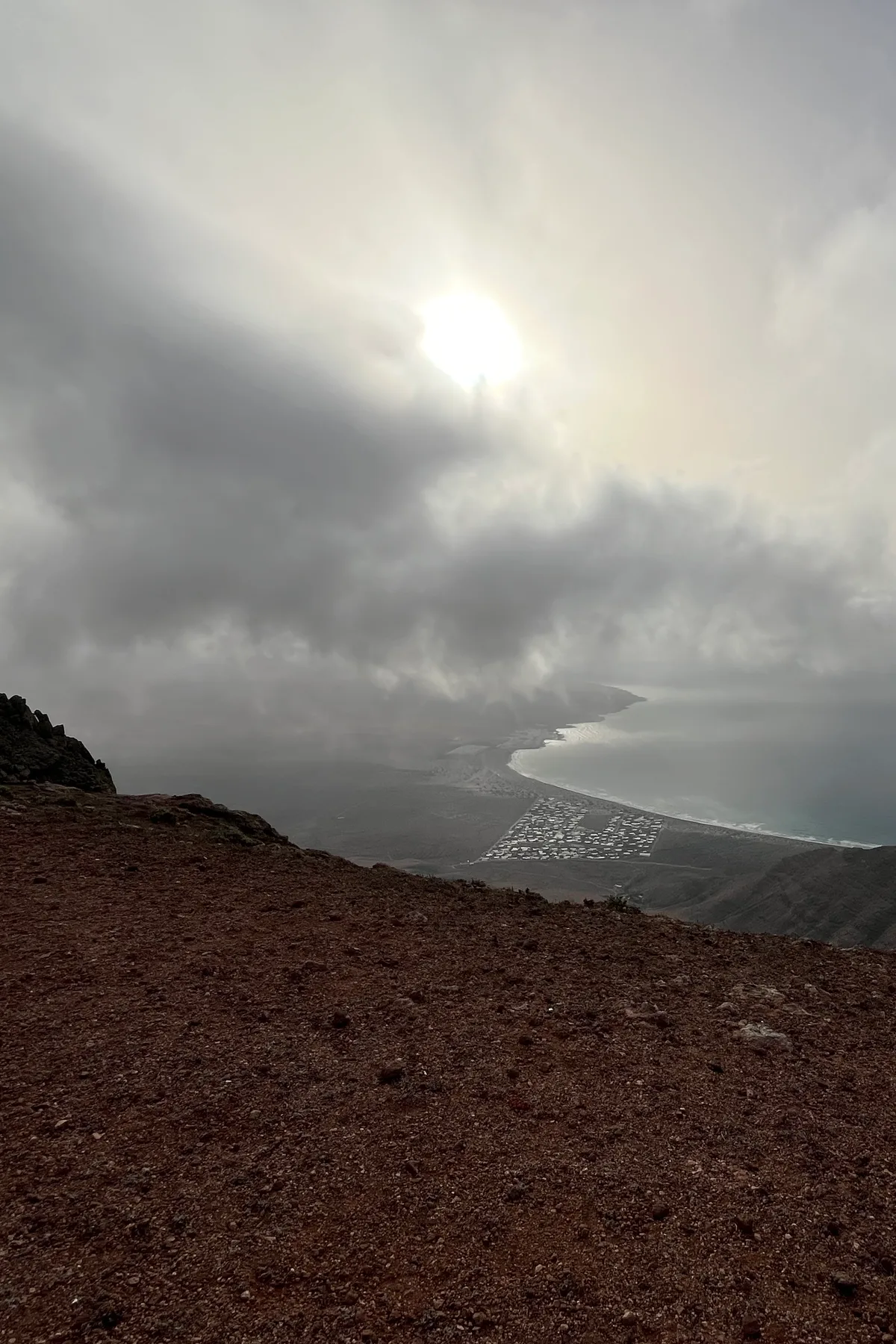
Everyone photographs the Famara cliff from below. Almost nobody stands on its lip. The road up from Teguise's plateau ends near the Ermita de las Nieves, a tiny white chapel at around 600 metres where the island simply stops: beyond the wall, a sheer drop to the Risco coast, with Famara's beach curling gold below, La Graciosa and the Chinijo islands arranged like a fleet, and — on clear days — the whole north of the island at your feet. The chapel of the Virgin of the Snows is the island's oldest high sanctuary, where farmers once climbed to pray for rain from the cloud-catching heights. Paragliders launch nearby; sunset turns the whole rampart pink. Free, unfenced, usually empty. Mind the edge — it's absolutely real.
Ermita de las Nieves: the top of the wall (and the island's oldest weather report)
Everyone photographs the Famara cliff from below. Almost nobody stands on its lip. The road up from Teguise's plateau ends near the Ermita de las Nieves, a tiny white chapel at around 600 metres where the island simply stops: beyond the wall, a sheer drop to the Risco coast, with Famara's beach curling gold below, La Graciosa and the Chinijo islands arranged like a fleet, and — on clear days — the whole north of the island at your feet. The chapel of the Virgin of the Snows is the island's oldest high sanctuary, where farmers once climbed to pray for rain from the cloud-catching heights. Paragliders launch nearby; sunset turns the whole rampart pink. Free, unfenced, usually empty. Mind the edge — it's absolutely real.
La Geria & the centre
No photos, no spoilers — go and discover it for yourself.
8 places
Swipe to see them
La Geria & the centre · 1/8
Fundación César Manrique (Tahíche)
Manrique's home, built inside volcanic bubbles.
La Geria & the centre · 2/8
LagOmar (Nazaret)
A house carved into an old quarry, linked to Omar Sharif.
La Geria & the centre · 3/8
Museo Agrícola El Patio (Tiagua)
An old farm estate with windmills and island wine.
La Geria & the centre · 4/8
Museo Etnográfico Tanit
How islanders once lived, kept inside a family house.
La Geria & the centre · 5/8
Casa-Museo del Campesino (Mozaga)
Manrique's tribute to the island's farmers.
La Geria & the centre · 6/8
Ermita de los Dolores (Mancha Blanca)
The chapel whose Virgin is said to have stopped the lava.
La Geria & the centre · 7/8
La Geria — vinha em hoyos
Vines growing in black ash pits behind stone walls.
La Geria & the centre · 8/8
Iglesia de San Bartolomé
The village's old parish church, facing a quiet square.
Fifteen million years: the veteran of the archipelago
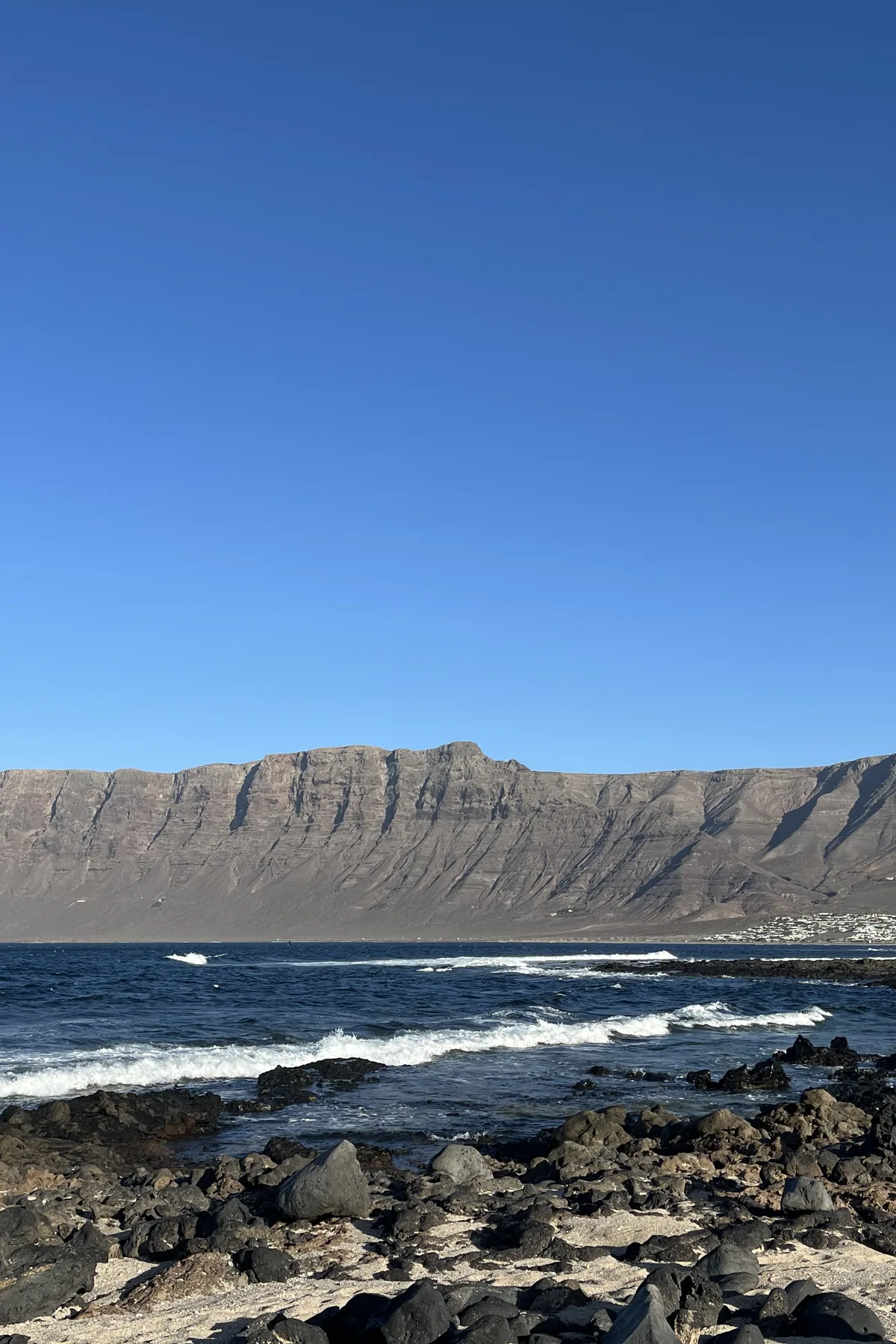
Lanzarote is, together with Fuerteventura, the oldest island in the Canaries: it has been out of the water for some fifteen million years. It was born from the ocean floor the way all the Canaries were — eruption by eruption — and it actually started out as two islands: one massif in the south (Los Ajaches) and another in the north (Famara), which later eruptions and a river of sand ended up stitching together. Its age explains its silhouette: millions of years of wind and waves have polished it low and elegant. And it keeps a family secret: when sea levels fell during the ice ages, Lanzarote and Fuerteventura were one single great island. Scientists call it Mahan.
Fifteen million years: the veteran of the archipelago
Lanzarote is, together with Fuerteventura, the oldest island in the Canaries: it has been out of the water for some fifteen million years. It was born from the ocean floor the way all the Canaries were — eruption by eruption — and it actually started out as two islands: one massif in the south (Los Ajaches) and another in the north (Famara), which later eruptions and a river of sand ended up stitching together. Its age explains its silhouette: millions of years of wind and waves have polished it low and elegant. And it keeps a family secret: when sea levels fell during the ice ages, Lanzarote and Fuerteventura were one single great island. Scientists call it Mahan.
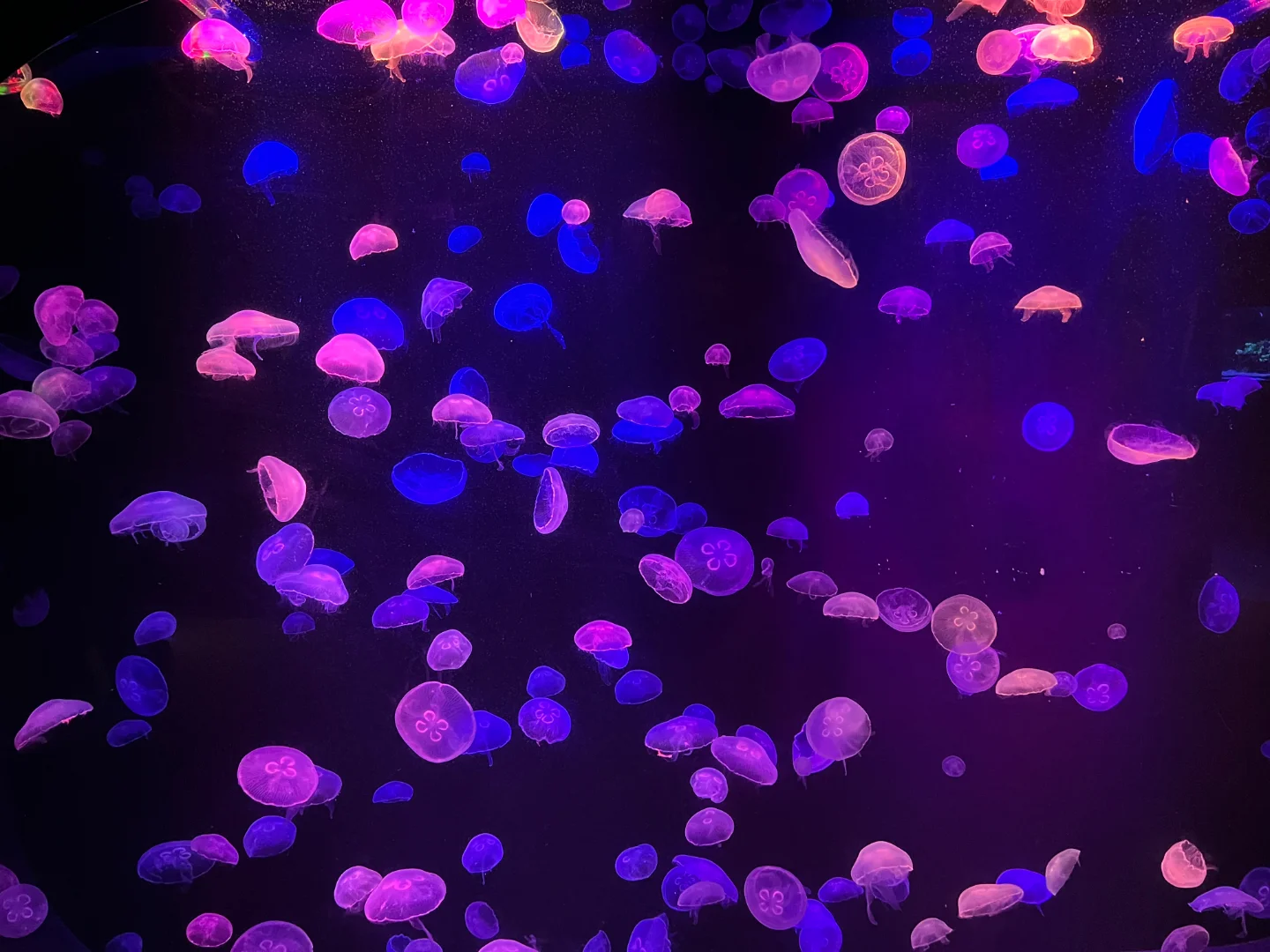
Life Beneath the Waves
The greatest nature reserve of Lanzarote is the one you cannot see from the beach. Beneath the surface, the island's volcanic geology continues: lava reefs, arches, caves and walls of black rock, swept by clean Atlantic water so clear that visibility often reaches thirty metres. For divers and snorkellers, it is one of the finest playgrounds in Europe.
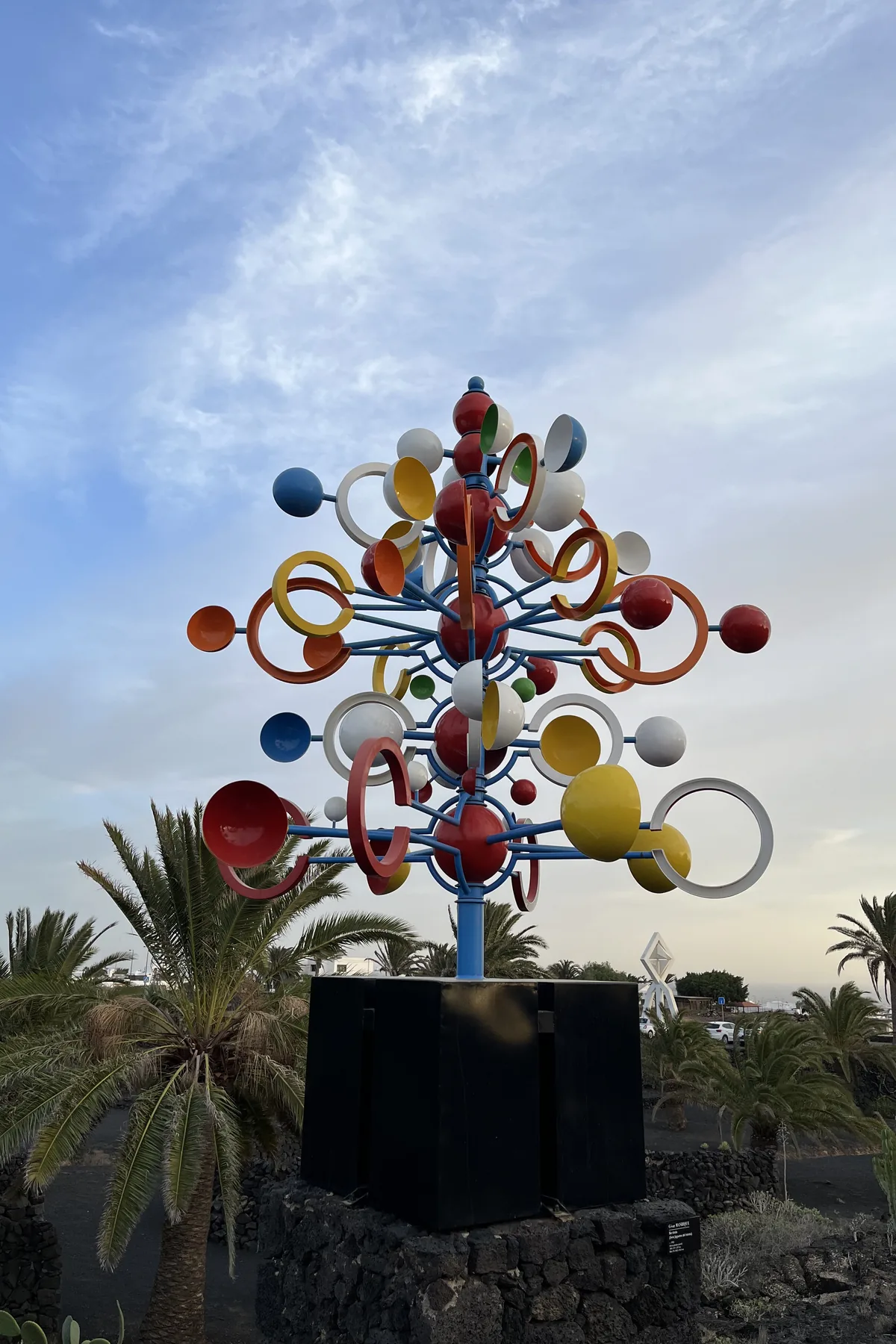
Exhibitions right now
What is on show on the island these weeks. Dates, venue and the official page.
3 exhibitions
Swipe to see them
Exhibitions right now · 1/3
until Jan 16
Germán Páez — Wild Palms
Exposición
El Almacén
Libre y gratuita
Exhibitions right now · 2/3
until Jan 16
Jesús Madriñán — Lanzarote
Exposición
El Almacén
Libre y gratuita
Exhibitions right now · 3/3
until Jan 16
María Rosa Aránega — Atlas Lanzarote
Exposición
El Almacén
Libre y gratuita
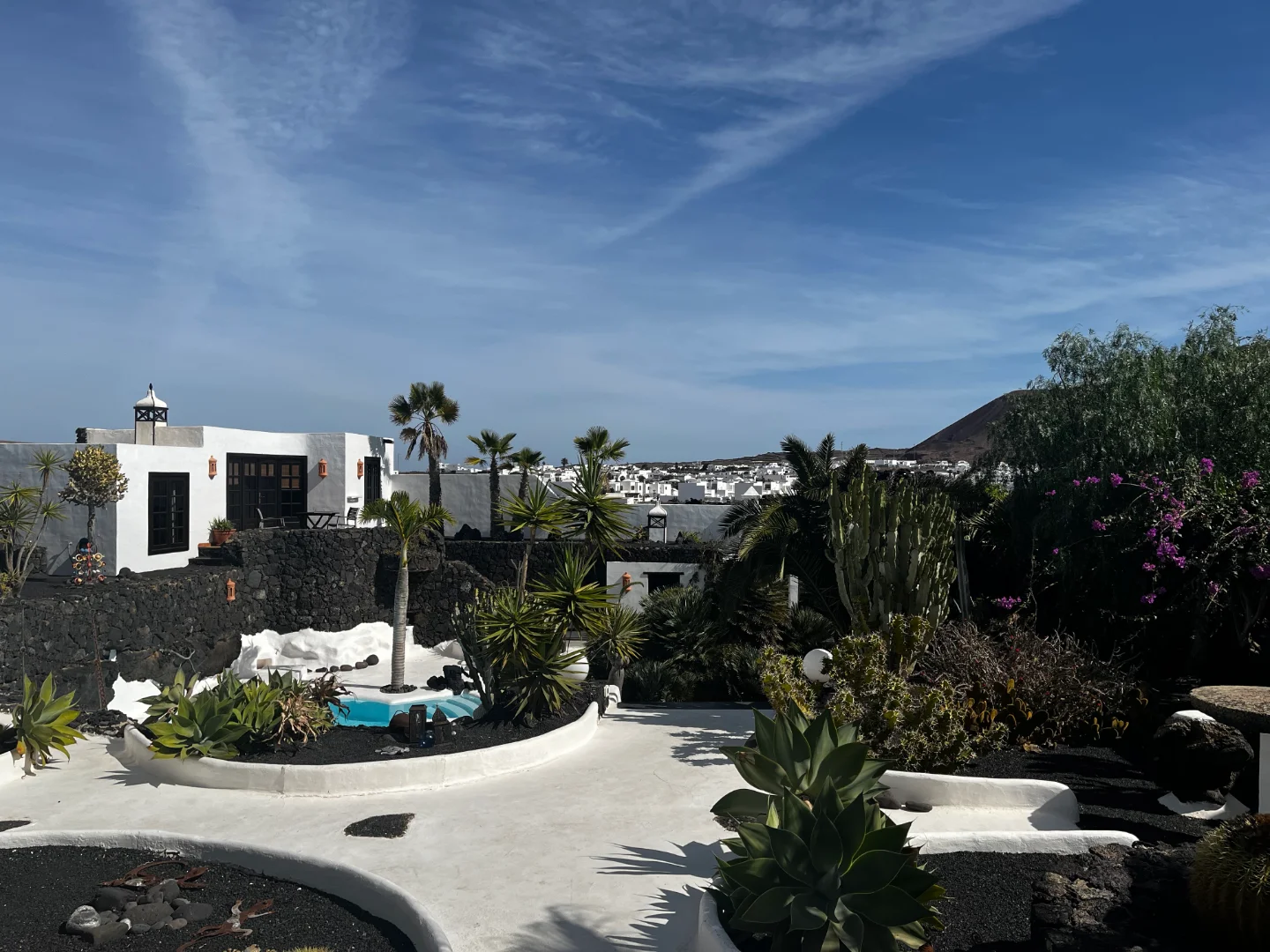
White, Green and Volcanic: The Architecture of Lanzarote
Fly over Lanzarote and you will notice something almost no other holiday island can offer: harmony. Villages of low, brilliant-white houses are scattered like dice across black volcanic plains. No high-rise hotels break the horizon. No advertising billboards line the roads. This is not an accident — it is one of the great collective decisions of the island's history.
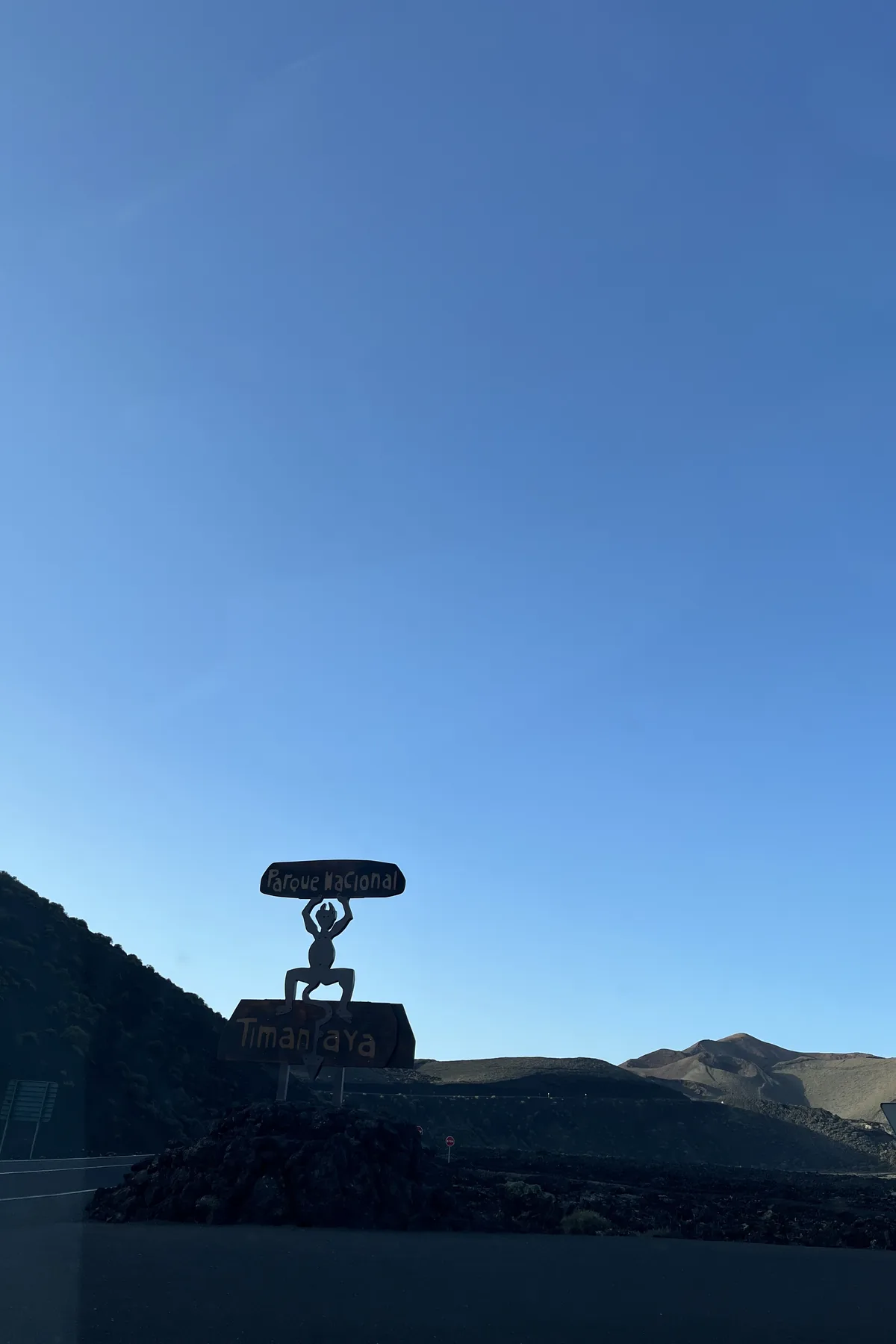
Tales of the Timanfaya devil
Sit down — this one is better told slowly. When the earth opened in 1730, the islanders saw in the flames what their times allowed them to see: the devil himself dancing among the volcanoes. From that fear were born tales still whispered today: figures dancing in the glow, pacts, cries beneath the earth. And a more tender one: the tale of old Hilario, the hermit who after the eruptions settled in the very heart of the fire with his camel, planted a fig tree on the volcano's warmth — and the fig tree, they say, gave flowers but never fruit: it refused to feed the devil. The hillock where he lived bears his name, and on top of it today stands the restaurant that roasts chickens with volcanic heat. Tales, here, end at the table.
Timanfaya
No photos, no spoilers — go and discover it for yourself.
4 places
Swipe to see them
Timanfaya · 1/4
Caldera Blanca
Cross an old lava field to a vast pale crater.
Timanfaya · 2/4
Parque Nacional de Timanfaya — Islote de Hilario
The ground here is hot enough to grill food.
Timanfaya · 3/4
Montaña Colorada
A rust-red cone with a huge volcanic bomb at its foot.
Timanfaya · 4/4
Volcán del Cuervo
Walk right into the crater of a volcano from 1730.
The suitcases to Havana: when conejeros crossed the sea
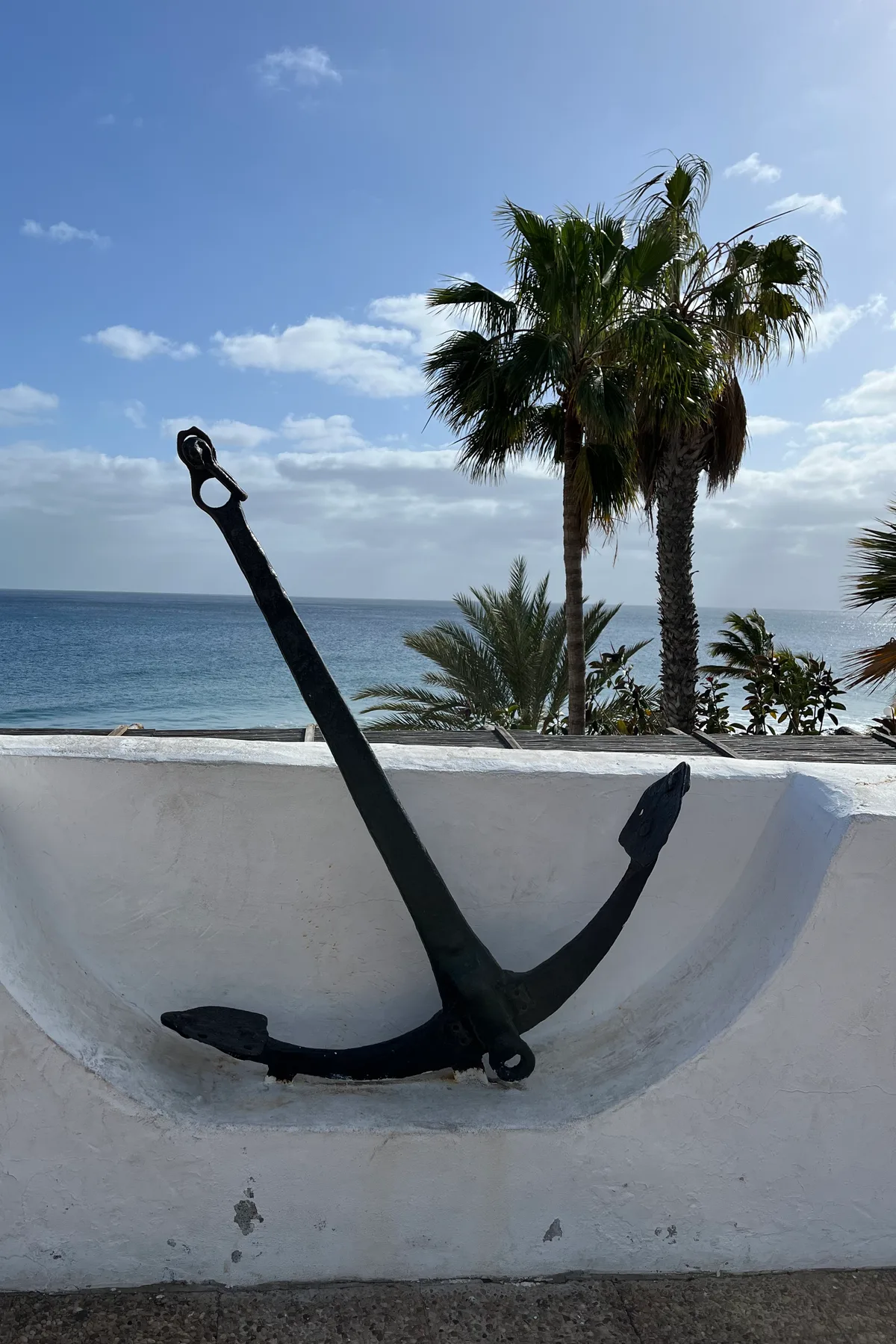
For a century and a half, Lanzarote's biggest export was its children. Drought years, volcano-poisoned harvests and hungry decades pushed wave after wave of conejeros onto ships bound west: to Cuba above all — where "isleño" simply means Canarian — to Uruguay and Argentina, and in the desperate 1940s-50s to Venezuela, sometimes in overloaded sailboats that crossed the Atlantic clandestinely. Whole villages had more sons in Havana than at home. Many returned — the "indianos", with linen suits, savings and Cuban rhythms that seeped into island music — and many never did, which is why half the island has cousins in Caracas and why Canarian and Caribbean Spanish are practically siblings. The island you're enjoying was, for generations, an island people had to leave. Worth remembering between beaches.
The suitcases to Havana: when conejeros crossed the sea
For a century and a half, Lanzarote's biggest export was its children. Drought years, volcano-poisoned harvests and hungry decades pushed wave after wave of conejeros onto ships bound west: to Cuba above all — where "isleño" simply means Canarian — to Uruguay and Argentina, and in the desperate 1940s-50s to Venezuela, sometimes in overloaded sailboats that crossed the Atlantic clandestinely. Whole villages had more sons in Havana than at home. Many returned — the "indianos", with linen suits, savings and Cuban rhythms that seeped into island music — and many never did, which is why half the island has cousins in Caracas and why Canarian and Caribbean Spanish are practically siblings. The island you're enjoying was, for generations, an island people had to leave. Worth remembering between beaches.
Music & shows
Concerts, theatre, dance and festivals coming up on the island. Date, venue, price and the official page.
5 upcoming events
Swipe to see them
Music & shows · 1/5
Thu, Oct 22 · 08:00 PM
Los Sara Fontán — y Pura Márquez
Música
Auditorio Cueva de los Verdes
20 €
Music & shows · 2/5
Fri, Oct 23 · 08:00 PM
Vierdingo — Compañía Esteban Garrido
Teatro
El Almacén
10 €
Music & shows · 3/5
Fri, Oct 30 · 12:00 AM
Soraia Cardoso — esFADO
Música
El Almacén
10 €
Music & shows · 4/5
Fri, Nov 6 · 12:00 AM
Ana Viciosa, la señora de Tinajo — Compañía Regañiza
Teatro
Auditorio de Jameos del Agua
25 €
Music & shows · 5/5
Fri, Dec 11 · 12:00 AM
Clavelitos — En concierto
Música
El Almacén
5 €
Surviving without rain: the tricks of the coastal plants
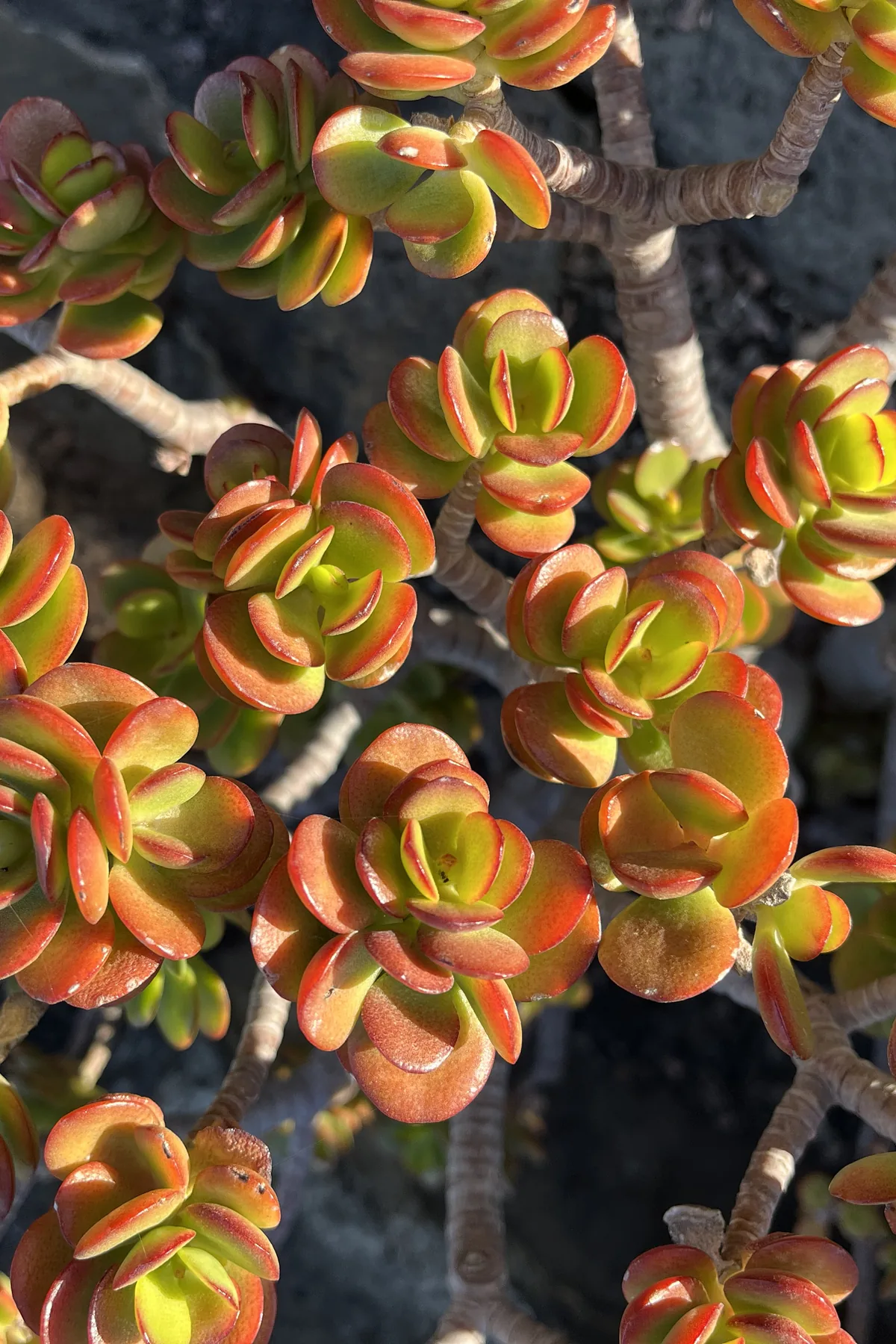
On Lanzarote's front line of coast, nothing should be able to live: salt, wind, African sun and months without a drop of rain. And yet there they are — the uvilla de mar (sea grape) with its leaves like tiny water-filled grapes, the silvery salados (saltbushes), the balancón that builds dunes, the lechuga de mar (sea lettuce) the shepherds used to eat. Each one is a survival manual: leaves turned into tanks, roots metres long, waxy skins, glands that spit out the salt. They drink from the dew, from the fog and from the moisture of the sea itself. They are the island's natural bonsai: small, tough and perfect. And they are what holds down the sand you're walking on.
Surviving without rain: the tricks of the coastal plants
On Lanzarote's front line of coast, nothing should be able to live: salt, wind, African sun and months without a drop of rain. And yet there they are — the uvilla de mar (sea grape) with its leaves like tiny water-filled grapes, the silvery salados (saltbushes), the balancón that builds dunes, the lechuga de mar (sea lettuce) the shepherds used to eat. Each one is a survival manual: leaves turned into tanks, roots metres long, waxy skins, glands that spit out the salt. They drink from the dew, from the fog and from the moisture of the sea itself. They are the island's natural bonsai: small, tough and perfect. And they are what holds down the sand you're walking on.

What the names mean: reading the map's oldest language
Look at the map and you're reading the island's oldest surviving text. Timanfaya, Tinajo, Tahíche, Guatiza, Yaiza, Órzola, Zonzamas, Guanapay — these words are older than Spanish here: they're the echo of the language of the Majos, the island's first people, cousins of the Berber tongues of North Africa. Tin-/Te- beginnings (Timanfaya, Teguise, Tinajo) carry a Berber place-marker meaning roughly "place of". Some names hide people: Teguise was a princess, daughter of the last Majo king; Zonzamas was a king; Yaiza, tradition says, a girl's name. Others came later with the conquerors' ships: the jable comes from French sable (sand), Rubicón from the conquistadors' Latin ambitions. Every road sign is a fossil. This card teaches you to read a few.
What the names mean: reading the map's oldest language
Look at the map and you're reading the island's oldest surviving text. Timanfaya, Tinajo, Tahíche, Guatiza, Yaiza, Órzola, Zonzamas, Guanapay — these words are older than Spanish here: they're the echo of the language of the Majos, the island's first people, cousins of the Berber tongues of North Africa. Tin-/Te- beginnings (Timanfaya, Teguise, Tinajo) carry a Berber place-marker meaning roughly "place of". Some names hide people: Teguise was a princess, daughter of the last Majo king; Zonzamas was a king; Yaiza, tradition says, a girl's name. Others came later with the conquerors' ships: the jable comes from French sable (sand), Rubicón from the conquistadors' Latin ambitions. Every road sign is a fossil. This card teaches you to read a few.